

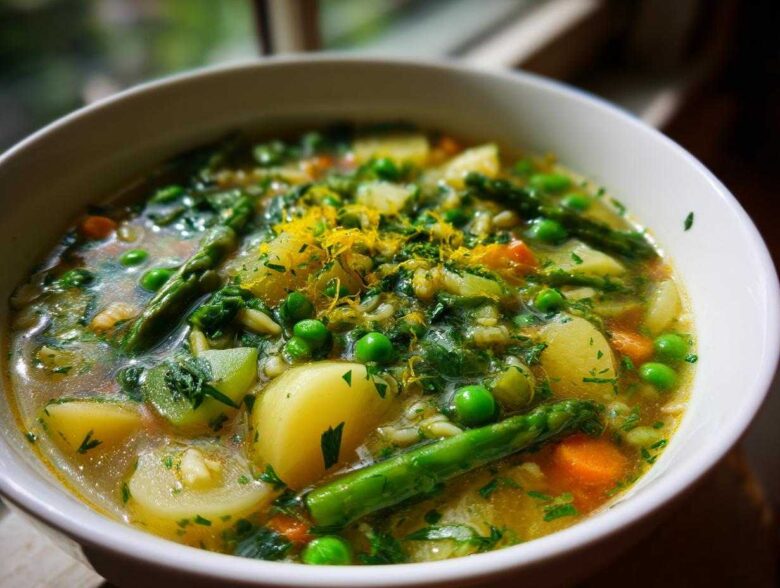
Ah, spring! When the world finally wakes up and everything tastes green and bright again, that’s when I get the itch to ditch my heavy winter chili and lighter fare. Seriously, nothing beats that first bowl of soup that tastes exactly like the garden just opened up. This is genuinely my favorite time of year to cook, and the recipe I go back to every single time is my definitive, vibrant, and unbelievably fresh Spring Vegetable Minestrone Soup.
I know, I know, Minestrone sometimes sounds heavy, but trust me on this one. This recipe uses new potatoes, crisp asparagus, and sweet peas, all swimming in a wonderfully clear broth. It’s the ultimate healthy, comfort food that doesn’t weigh you down for spring celebrations. I learned how to make this version years ago when I first moved apartments and wanted something quick and satisfying after buying my first bunch of fresh spring vegetables. It’s become our standing tradition, and I think you’re going to love how fast it comes together!
If you want to know more about how we run things here, check out our philosophy on cooking over at the About Us page!
Why This Spring Vegetable Minestrone Soup Stands Out
So, why am I so obsessed with this particular recipe over all the other vegetable soups out there? Honestly, it boils down to that clean, vibrant taste that screams ‘new season!’ Unlike the heavy, tomato-based minestrones you make in January, this one sings. It’s all about letting those delicate new spring veggies really shine through without being masked by too much seasoning.
I’ve put a lot of thought into keeping this light, herbaceous, and quick. And since I focus so much on seasonal cooking, I can confidently say this recipe nails that fresh, garden vibe perfectly. You can find more of my seasonal philosophy in my Seasonal Vegetable Soup Recipe Guide!
Here’s why I think you’ll keep making this:
- It’s Shockingly Fast: Seriously, from chopping board to the dinner table in about 45 minutes total. That makes it perfect for busy weeknights.
- Broth Over Batter: We’re aiming for a clear, light broth, not a thick stew. It feels lighter and respects the tenderness of the asparagus and peas.
- Total Flexibility: If you can’t hunt down fava beans, no big deal! This soup welcomes almost any fresh green you bring home from the market.
Quick Weeknight Spring Soup Ready in Under an Hour
You heard me right—45 minutes! That makes this my go-to Quick Weeknight Spring Soup when I want something wholesome but don’t want to spend all evening stirring. Because we’re using small pasta and quick-cooking veggies like asparagus, the simmering time is minimal. It’s satisfying comfort food without the heavy commitment!
Best Spring Vegetable Soup Italian Style Profile
This soup truly captures the Best Spring Vegetable Soup Italian Style. We skip the heavy spices often found in richer winter recipes. Instead, we rely on simple thyme and oregano, and just before serving, we hit it with a burst of fresh lemon zest. That zest is the whole game changer—it brightens everything up and stops the broth from tasting flat. It’s sunshine in a bowl!
Gathering Vibrant Spring Soup Ingredients for Your Spring Vegetable Minestrone Soup
Okay, step two! Now that we’ve hyped up how great this soup is, we need to talk turkey about what goes into the pot. The key to the best Spring Vegetable Minestrone Soup is using ingredients that look and smell like they were just pulled from the earth this morning. Don’t skimp here; the fresh quality really makes that clear broth shine!
For this recipe, everything pretty much goes in one after another, so organization is vital. Make sure your carrots and celery are diced uniformly, and don’t forget to trim that asparagus nicely. I included fava beans because, well, they are the taste of early spring if you can find them! But if you can’t manage them, don’t stress; just skip them. If you need more inspiration on what else to grab at your market, check out my guide to Vibrant Spring Soup Ingredients!
Here is what you need lined up before you even turn on the stove. This list is exactly what I use every time:
- 1 tablespoon olive oil (Good quality, please—it is the base!)
- 1 small yellow onion, chopped
- 2 carrots, diced
- 2 celery stalks, diced
- 2 cloves garlic, minced
- 4 cups vegetable broth (or chicken broth if you prefer)
- 1 cup water
- 1/2 cup small pasta—I usually grab ditalini or tiny shells
- 1 cup new potatoes, quartered (The skin-on ones are the best!)
- 1 cup asparagus, trimmed and cut into 1-inch pieces
- 1/2 cup shelled fresh or frozen peas
- 1/2 cup shelled fava beans (only if you’re feeling fancy!)
- 2 cups baby spinach or kale, roughly chopped
- 1 teaspoon dried oregano
- 1/2 teaspoon dried thyme
- Salt and black pepper to taste (Be brave with the pepper!)
- 1 tablespoon fresh lemon zest (This is non-negotiable for brightness!)
- 1/4 cup fresh parsley, chopped for garnish
Step-by-Step Instructions for Your Spring Vegetable Minestrone Soup
Alright, let’s get cooking! Making this Spring Vegetable Minestrone Soup is wonderfully straightforward, but the order of operations is what keeps that broth so beautifully light. We aren’t making a heavy sludge here; we want distinct, bright vegetables! You’ll find the timing helps keep everything perfectly cooked. You can see my full thought process on making this recipe over at How to Make Minestrone with Early Spring Produce.
Building the Flavor Base: Sautéing Aromatics
First things first: Heat up that olive oil in a big Dutch oven or pot over medium heat. Toss in your onion, carrots, and celery right away. We want these sweating down until they are soft and sweet—we’re talking about 5 to 7 minutes here. Don’t rush this part! After they’ve softened up nicely, toss in your minced garlic and cook for just one more minute until you can really smell it. We are building the foundation without adding any harsh color or deep caramelization, which keeps the broth light for this Spring Vegetable Minestrone Soup.
Simmering Potatoes and Pasta for the Spring Vegetable Minestrone Soup
Time to add the liquid! Pour in your vegetable broth and water. Then, bring the whole thing to a boil. Once it’s bubbling, drop in those quartered new potatoes and your dried oregano and thyme. Immediately turn the heat down so it’s just simmering gently. You need to let those potatoes cook through for about 10 minutes first. After the potatoes have had their head start, throw in your small pasta. Remember, you’ll cook the pasta according to its package directions, but generally, that’s about 6 to 8 minutes.
Adding Tender Spring Vegetables and Finishing Touches
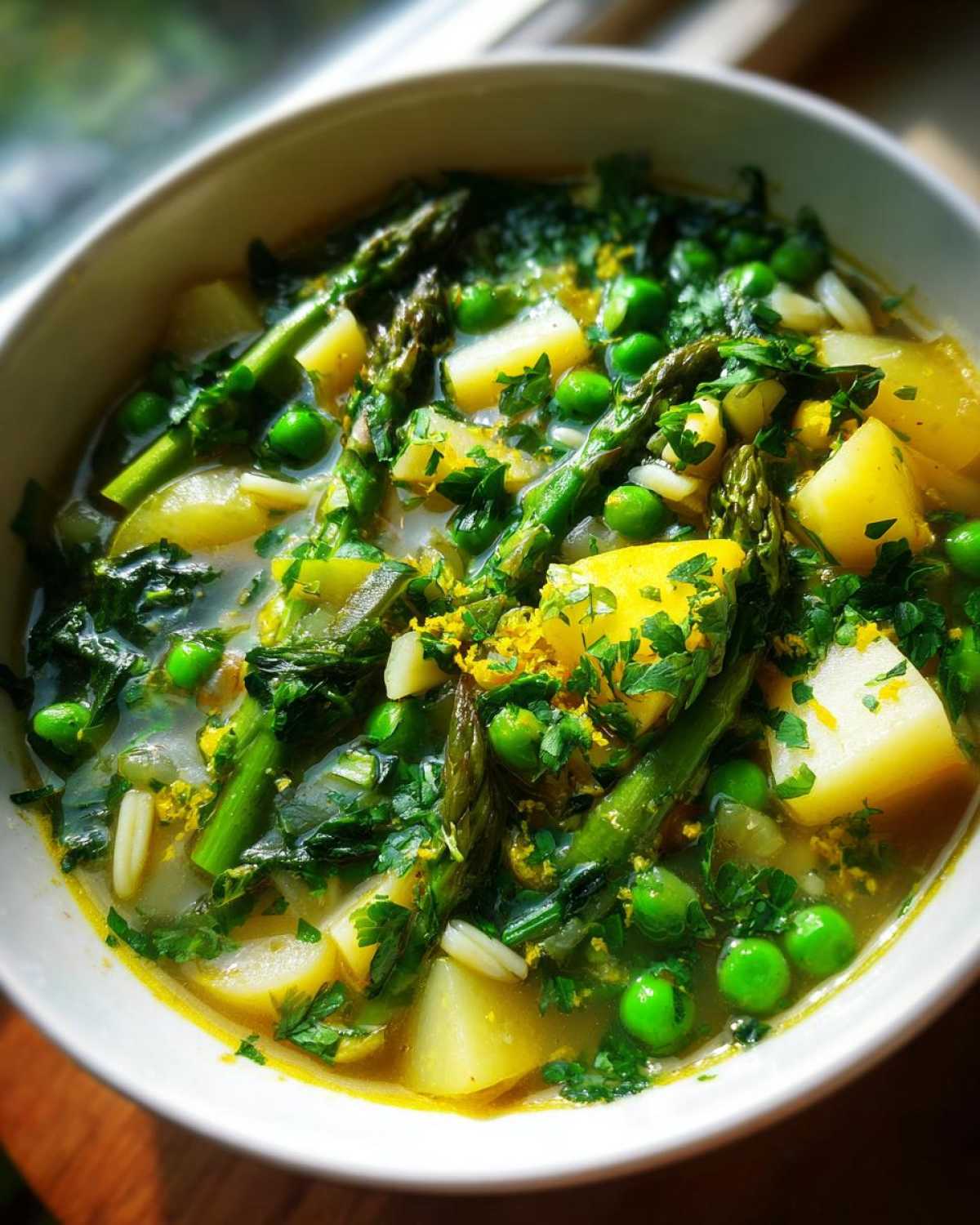
This is where the “spring” really shows up! Once the pasta is nearly done, add your cut asparagus and the shelled peas (and fava beans if you decided to use them). These cook fast! Let them simmer just for 3 to 5 minutes until they are tender-crisp. We do not want mushy asparagus! Once those are perfect, kill the heat completely. Stir in your chopped greens—spinach or kale—until they just wilt from the residual heat. Finally, remove the whole pot from the burner and stir in that tablespoon of fresh lemon zest, plus salt and pepper to taste. That zest added off-heat seals in the freshness!
Tips for Success with Your Homemade Spring Minestrone with Fresh Herbs
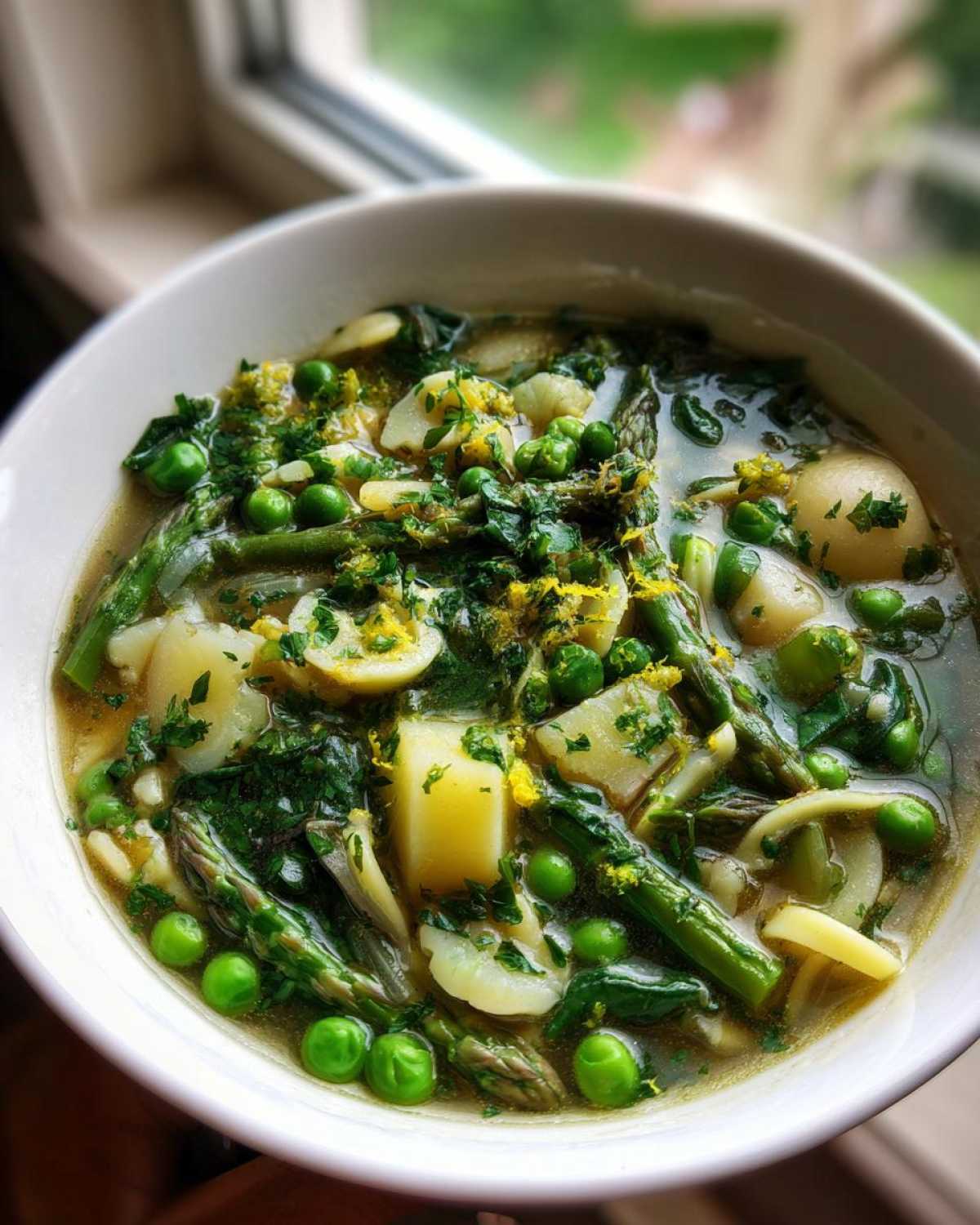
Even though this recipe for Homemade Spring Minestrone with Fresh Herbs is pretty forgiving, there are a few little secrets I rely on to make sure every batch tastes exactly like the best version possible. These aren’t complicated steps, but they make a huge difference in the final texture and flavor profile. Because we are working with delicate spring produce, a little precision goes a long way!
I’ve learned these tricks over many seasons of cooking—and sometimes over-cooking—a few batches. I also always link out to my guide on Garlic Herb Roasted Veggies if you ever want to roast some toppers instead of just adding fresh greens!
Adjusting Consistency in Your Spring Vegetable Minestrone Soup
This is one of the most common questions I get: “Mine is too brothy!” or “Mine feels watery!” With Minestrone, you get to decide how thick you want it, really. If you find you want a slightly thicker soup that holds onto the pasta better—more of a stew feel—I have a super simple trick that uses the potatoes already in the pot. Just scoop out about half a cup of those cooked potatoes, put them on a cutting board, and mash them up with the back of a fork until they form a rough paste. Stir that potato paste right back into the soup right before you add the greens. It thickens the broth naturally without needing any weird slurry!
Conversely, if you accidentally added too much water or your vegetables released more liquid than expected, don’t panic! Just take the pot off the heat and let it sit for five minutes. Sometimes the liquid settles. If it’s still too thin, add a splash more broth—it’s better to err on the side of slightly thinner, since it thickens as it cools anyway.
Vegetarian Spring Minestrone Quick Meal Adaptations
This recipe is designed to be a fantastic Vegetarian Spring Minestrone Quick Meal right out of the gate, which is perfect for quick, lighter dinners. Since we are using vegetable broth, it’s already meat-free! If you happen to be making this for someone vegan, you just need to double-check that your vegetable broth brand doesn’t sneak in any hidden animal products—though most commercial versions are totally fine. That’s the only thing you need to check!
If you *do* want to make it heartier without adding meat, you can easily turn this into a more substantial Vegetarian Spring Minestrone Quick Meal by adding a can of rinsed cannellini beans or chickpeas when you add your potatoes. That extra five minutes of simmering will let them heat through nicely and give everyone a great protein boost!
Ingredient Substitutions for Early Spring Produce
I know that sometimes the produce section doesn’t cooperate with the recipe you have in front of you, especially early in the season when everything is still trickling in! Don’t let that stop you from making this soup. My whole philosophy hinges on celebrating what’s fresh, but if all you can find are heartier vegetables, we can absolutely work with that in our Spring Vegetable Minestrone Soup.
If you’re stuck and can’t seem to find those perfect asparagus spears or shelling peas, think about sturdy, quick-cooking substitutes. Zucchini is a fantastic stand-in—it brings that great green color and soft texture we want. You could also use thin slices of green beans instead of asparagus. Check out my tips for vegetable prep over at Garden Veggie Frittata Muffins for general cutting advice!
Here are the swaps you can confidently make:
- If you can’t find Asparagus: Swap for 1 cup of chopped zucchini or slender green beans. Since these don’t need much time, add them right when you add the peas—they only need about 3 to 4 minutes to become tender-crisp.
- If you can’t find Fava Beans: Just leave them out! No need to replace them, as they are optional anyway. If you really want that bean texture, a 1/2 cup of frozen shelled edamame works wonderfully and cooks in the same amount of time as the peas.
- If you can’t find New Potatoes: You can use small Yukon Golds, but you might need to peel them if the skin seems thick. If you use larger potatoes, just be sure to cut them into smaller, uniform cubes (about 1/2 inch) so they cook down within that initial 10-minute simmer time alongside the broth.
The goal is always to keep that 30-minute simmer time as consistent as possible, so if you swap in something dense like carrots that take longer to cook, make sure you pre-cook those first before adding your pasta!
Serving Suggestions for a Light Broth Vegetable Soup for Spring
The final, and arguably most important, step in making sure your Light Broth Vegetable Soup for Spring is a total showstopper is how you dress it up right before serving. Since this Minestrone is intentionally kept light and brothy, the garnishes really get a chance to shine and add those layers of flavor and texture we want!
I’m not one for letting a good bowl go plain, so I always have a few small bowls ready on the table when we sit down to eat. Think of these additions as the final pop of color and flavor enhancement—especially since we left the broth intentionally subtle!
If you’re looking for something amazing to dip into this soup, you absolutely have to try my recipe for Easy Homemade Garlic Butter Naan Bread. It’s seriously addictive!
The Garnishes That Make the Difference
Because the flavor base is so clean—just vegetables, stock, and a little lemon zest—you have tons of room to customize right in the bowl. Don’t skip this part; it elevates your Spring Vegetable Minestrone Soup from a simple weeknight meal to something special.
- Parmesan Power: A generous grating of high-quality Parmigiano-Reggiano is traditional and wonderful. The saltiness and nutty flavor melt right into the broth beautifully.
- Basil Pesto Dollop: This is my personal favorite trick! A small teaspoon of bright basil pesto dropped right into the center of the hot soup before you eat adds amazing depth. It looks gorgeous when it slightly swirls into the broth.
- Extra Fresh Parsley: We used it as a garnish, but feel free to add more! Fresh green herbs are what spring cooking is all about.
The Perfect Pairing: Bread for Dipping
You simply cannot have an Italian-style soup without something crusty on the side to drag through every last drop of that savory broth. Since this soup is lighter, you don’t need anything too heavy, though I won’t stop you if you use a thick slice!
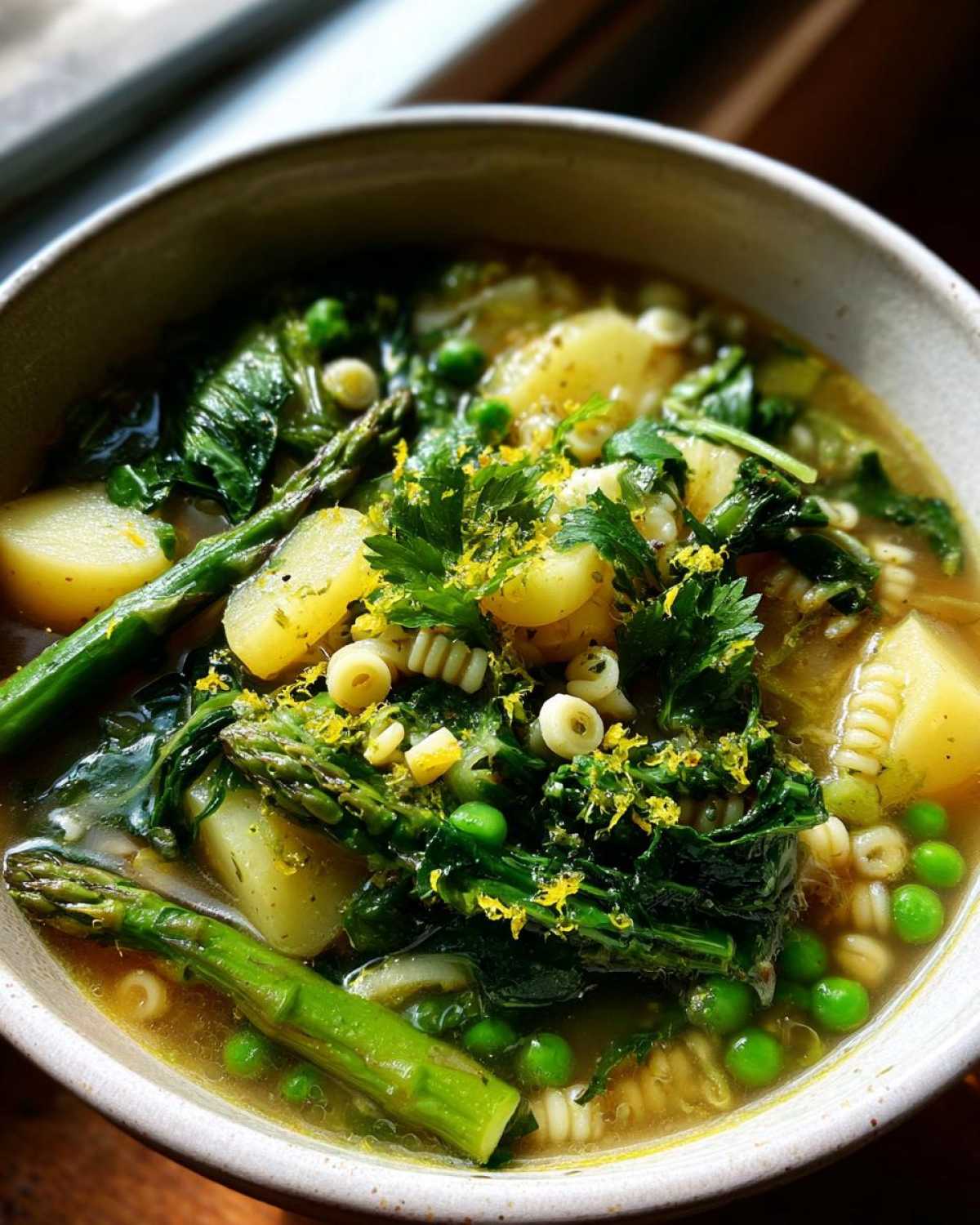
A lightly toasted baguette smeared with just a touch of olive oil or garlic butter is perfection. It soaks up the broth without falling apart instantly. If you used a different pasta shape than shells or ditalini, make sure it’s not too big or chewy. Small pasta is best because it’s easy to scoop alongside the vegetables and broth without needing a knife!
Storage and Reheating Your Spring Vegetable Minestrone Soup
Okay, so maybe you made a huge batch because, let’s be honest, leftovers of this Spring Vegetable Minestrone Soup are almost better the next day once the flavors have *really* settled in. Since this is a light broth soup loaded with fresh greens, storage is a breeze, but there’s one little quirk you need to watch out for!
I always tell people to keep leftovers in shallow, airtight containers in the fridge. This soup tastes amazing for about three to four days when stored properly. If you need to store it longer, the freezer works great! Pour it into freezer-safe containers, leaving about an inch of headspace at the top, and it’ll hold up wonderfully for two months. Just remember, freezing tends to change the texture of fresh pasta a little bit.
When it comes to reheating, we need to address the pasta situation. Because the pasta soaks up all that delicious broth while it sits, your soup is probably going to look much thicker than it did when you first pulled it from the fridge. Don’t worry, this is totally normal!
Reviving Leftover Minestrone
If you’re reheating small portions on the stovetop, just toss the soup in a saucepan over medium heat. As soon as you see it starting to warm up, add a small splash of water or extra broth—maybe a quarter cup for a single bowl. Stir it gently until it loosens back up to that beautiful, brothy consistency you love. If you’re microwaving, add the liquid before heating, stir halfway through, and reheat until piping hot.
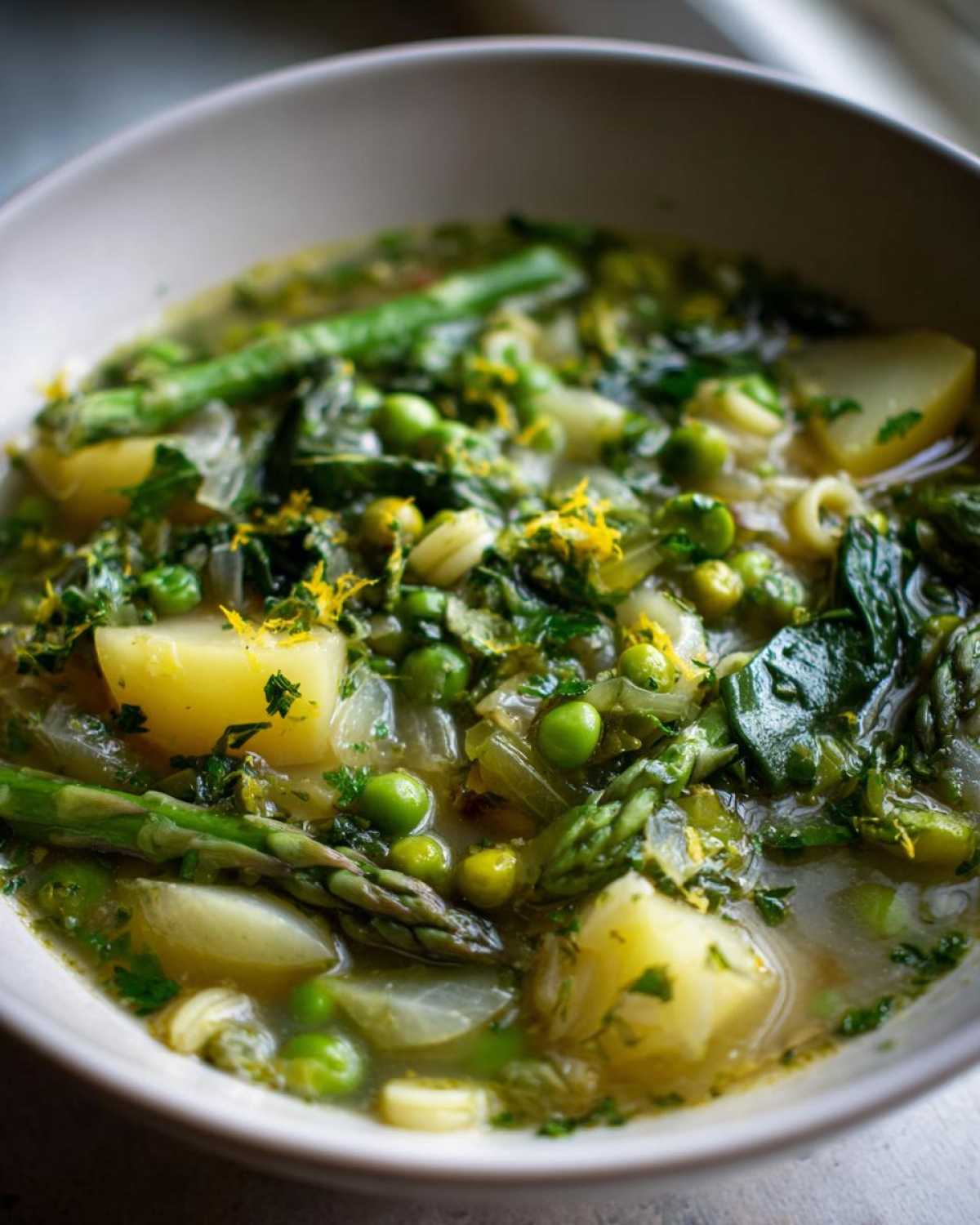
Never try to reheat the greens again! If you left the spinach or kale in the leftovers, it might look a little sad and dark after a day in the fridge. That’s why I always recommend leaving out a portion of the greens and only adding them fresh when you reheat the soup. If you already mixed them in, don’t stress, but fresh greens are definitely brighter! Stick these tips in your back pocket, and you’ll have perfect soup all week long!
Frequently Asked Questions About This Spring Vegetable Minestrone Soup
I totally get it; sometimes when you’re reading a recipe, you just have a few random thoughts pop up right before you start chopping! That’s why I pulled together the most common things people ask me about this Spring Vegetable Minestrone Soup. Hopefully, this clears up any confusion so you can get right to cooking!
We want you to feel confident in the kitchen, not stressed out! If you have questions that aren’t answered here, feel free to check out my other comfort food ideas, like my tips for Cheeseburger Soup, though this Minestrone is definitely lighter!
Can I use dried herbs instead of fresh in this Asparagus Pea Minestrone Recipe?
Yes, absolutely, you can use dried herbs! In fact, the recipe itself calls for dried oregano and thyme because they are reliable pantry staples for a Asparagus Pea Minestrone Recipe like this. If you happen to only have fresh herbs lurking in your fridge, my rule of thumb is to triple the amount. So, if the recipe says 1 teaspoon dried thyme, use 3 teaspoons of fresh thyme leaves. Fresh herbs are generally milder, so you need more bulk!
How can I make this a heartier Garden Fresh Minestrone Dinner?
That’s a great thought! While this recipe is meant to be a lighter option, it easily transforms into a satisfying Garden Fresh Minestrone Dinner if you need more staying power. The easiest way to beef it up is by adding protein or beans. When you add your potatoes and broth in step three, toss in a can (about 15 ounces) of rinsed cannellini beans—they are creamy and delicious! If you have some leftover shredded chicken from an earlier meal, that works perfectly too; just add it when you add your pasta so it has time to heat through completely.
Is this recipe truly vegetarian?
Yes, this recipe is inherently vegetarian! We called for vegetable broth, and the only potentially non-veg ingredient would be if you topped it with Parmesan cheese later on. If you skip the Parmesan and use a certified vegan vegetable broth, this recipe works perfectly as a vegan meal. It’s such a flexible foundation for any diet, making it an ideal Easy Spring Vegetable Soup Recipe for groups!
Why do I need lemon zest if I’m adding fresh parsley?
This is a great question that shows you’re paying attention to flavor layering! The parsley you add at the end is for fresh, herbaceous color and a very light finish. The lemon zest, however, hits a completely different note—it’s bright, slightly acidic, and cuts through the starchiness of the potatoes and pasta. I always add the zest right at the end, off the heat, because its essential oils are volatile and give the soup a genuine ‘zing’ that parsley alone just can’t provide when sitting in the broth.
Nutritional Estimates for This Seasonal Vegetable Soup Recipe Guide
So, if you’re watching your macros or just curious about what you’re putting into your body, here’s a rough breakdown of the nutrition in this lovely pot of soup. Please remember that I’m a cook, not a certified nutritionist, so these numbers are just estimates based on the ingredients listed in the recipe above. If you substitute vegetables or use a different type of pasta, these numbers will shift a bit, naturally!
We kept this recipe really light—lots of veggies and a clear broth—so the numbers are fantastic for a healthy meal. You can find a more detailed breakdown and disclaimer on my disclaimer page, just so you know exactly what you’re looking at!
These estimates are based on six generous servings:
- Calories: Around 220 per serving
- Fat: Very low, about 4 grams total
- Carbohydrates: Comes mostly from the potatoes and pasta, right around 38 grams
- Protein: A respectable 9 grams, thanks to the vegetables and pasta combination!
What I love most about these numbers is how low the saturated fat and cholesterol are—practically zero! It’s truly a clean, Seasonal Vegetable Soup Recipe Guide designed to make you feel energized, not weighed down. It’s comfort food that your body will actually thank you for eating!
PrintSpring Vegetable Minestrone Soup
A light, fresh minestrone soup featuring seasonal spring vegetables in a clear broth.
- Prep Time: 15 min
- Cook Time: 30 min
- Total Time: 45 min
- Yield: 6 servings
- Category: Soup
- Method: Stovetop Simmering
- Cuisine: Italian
- Diet: Vegetarian
Ingredients
- 1 tablespoon olive oil
- 1 small yellow onion, chopped
- 2 carrots, diced
- 2 celery stalks, diced
- 2 cloves garlic, minced
- 4 cups vegetable broth (or chicken broth)
- 1 cup water
- 1/2 cup small pasta (like ditalini or small shells)
- 1 cup new potatoes, quartered
- 1 cup asparagus, trimmed and cut into 1-inch pieces
- 1/2 cup shelled fresh or frozen peas
- 1/2 cup shelled fava beans (optional)
- 2 cups baby spinach or kale, roughly chopped
- 1 teaspoon dried oregano
- 1/2 teaspoon dried thyme
- Salt and black pepper to taste
- 1 tablespoon fresh lemon zest
- 1/4 cup fresh parsley, chopped for garnish
Instructions
- Heat the olive oil in a large pot or Dutch oven over medium heat. Add the onion, carrots, and celery. Cook until softened, about 5 to 7 minutes.
- Add the minced garlic and cook for 1 minute more until fragrant.
- Pour in the vegetable broth and water. Add the potatoes, oregano, and thyme. Bring the mixture to a boil, then reduce heat and simmer for 10 minutes, or until the potatoes begin to soften.
- Add the pasta to the pot and cook according to package directions, usually about 6 to 8 minutes.
- Add the asparagus and peas (and fava beans, if using). Continue to simmer for 3 to 5 minutes, until the asparagus is tender-crisp.
- Stir in the spinach or kale until it wilts, which takes about 1 minute.
- Remove the pot from the heat. Stir in the fresh lemon zest, salt, and pepper to taste.
- Ladle the soup into bowls. Garnish each serving with fresh parsley.
Notes
- If you cannot find specific spring vegetables, substitute with 1 cup of chopped zucchini or green beans.
- For a thicker soup, mash about 1/2 cup of the cooked potatoes against the side of the pot before adding the final greens.
- To make this recipe vegan, confirm your vegetable broth is vegan.
- Serve with grated Parmesan cheese or a dollop of basil pesto for added flavor.
Nutrition
- Serving Size: 1.5 cups
- Calories: 220
- Sugar: 6
- Sodium: 450
- Fat: 4
- Saturated Fat: 1
- Unsaturated Fat: 3
- Trans Fat: 0
- Carbohydrates: 38
- Fiber: 7
- Protein: 9
- Cholesterol: 0