

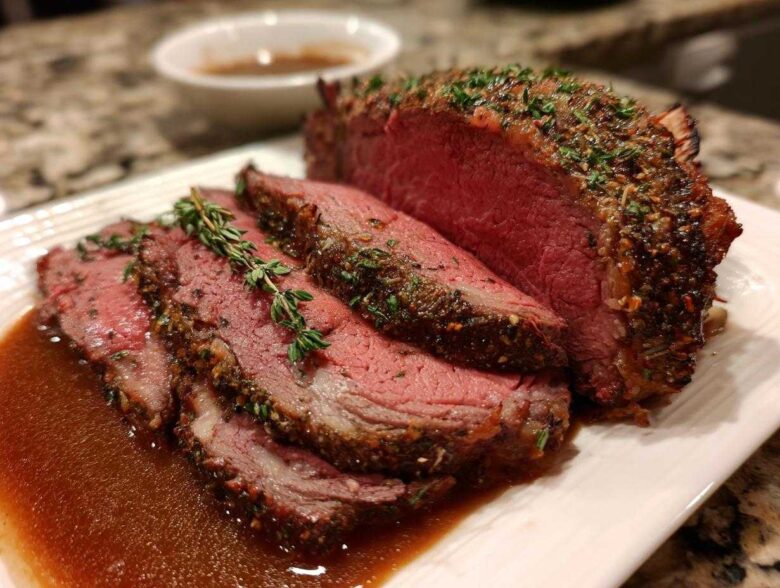
Okay, if you’re hosting Christmas or Thanksgiving, you know that feeling—the pressure to make the meal memorable starts with one thing: the centerpiece. For years, I was terrified of ruining that huge, beautiful roast. I swear, my early attempts at a prime rib were disastrously gray on the outside and ice-cold in the middle! But I cracked the code, folks. Trust me, after years of testing every trick out there, I finally landed on what I now call the Ultimate Easy Garlic Herb Oven-Roasted Prime Rib with Simple Au Jus. This method is straightforward, uses the power of simple temperature changes, and guarantees you that restaurant-quality, rosy, medium-rare perfection every single time. If you want to know more about the bakers behind these tested recipes, you can read about us over at our story. You’ve got this!
Why This Garlic Herb Prime Rib is the Best Prime Rib Recipe
I know there are a million roast recipes out there, but honestly, this one is my shining star. It’s the reason my family stopped buying it from the fancy butcher shop. People think roasting a huge roast is complicated, but I promise you, this is the Fool Proof Prime Rib Method. It gives you restaurant results without all the stress.
- The two-stage temperature cooking method is genius—it locks in the juices right away!
- The garlic and herb rub permeates deeply, giving you massive flavor without just sitting on the surface.
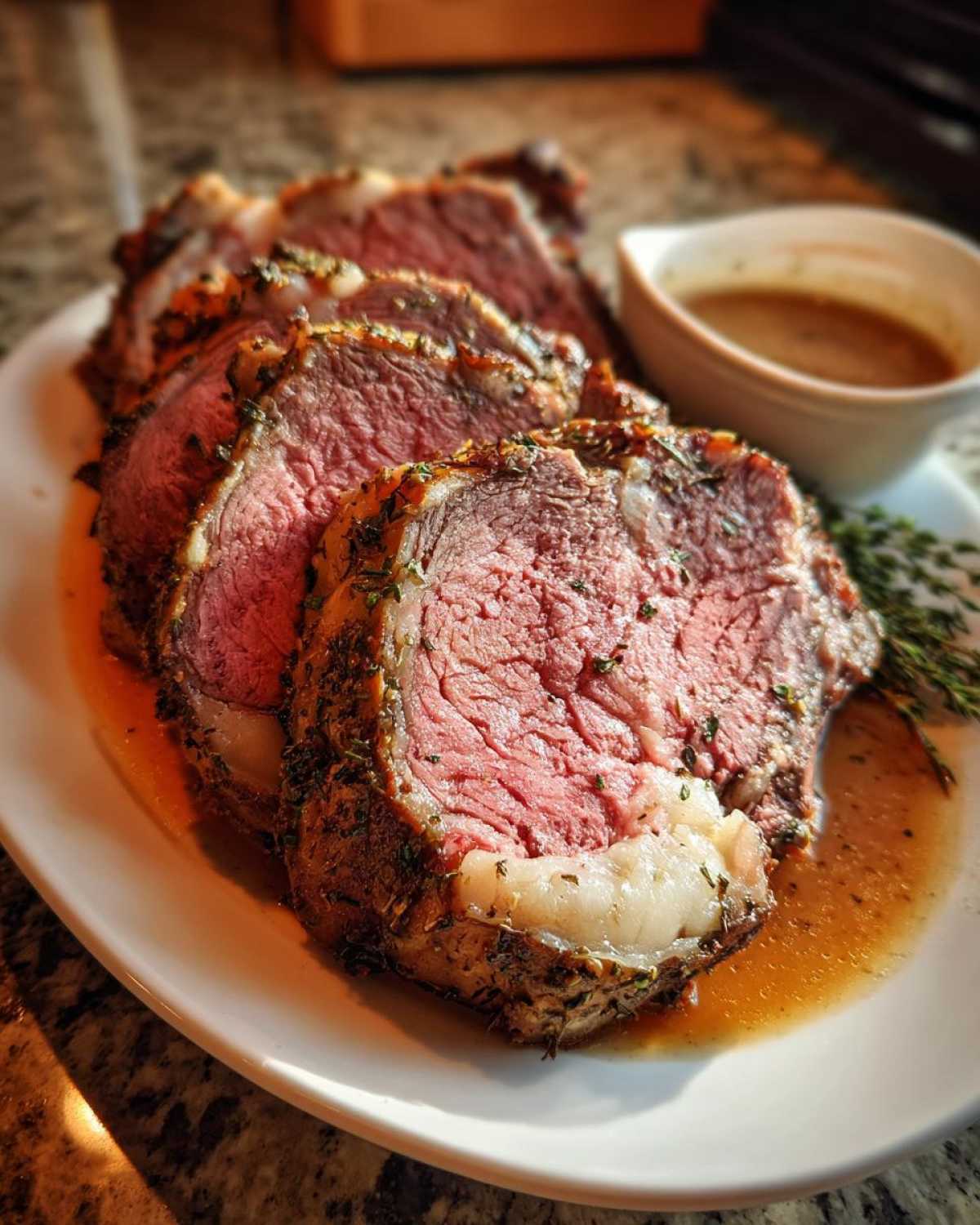
- It consistently hits that beautiful rosy center. This is truly the Best Prime Rib Recipe I’ve ever created.
Achieving a Perfect Medium Rare Prime Rib Roast
The secret weapon here is temperature management. We start hot, really hot, at 450°F. That initial blast creates that gorgeous, crisp, deeply seasoned crust we all love. Then, we immediately bring the heat down to 325°F to gently coast the interior up to temperature.
That’s where your meat thermometer becomes your best friend. For perfect How to Cook Prime Rib Medium Rare success, you must pull it when that thermometer reads exactly 125°F. Don’t guess! The resting period finishes the cooking gently, so pulling it right on time prevents overcooking the outside while the center is still perfect.
Ingredients for Your Ultimate Easy Prime Rib
Getting the ingredients ready is so much simpler than you think, especially since we aren’t messing around with complicated marinades. For the roast itself, you definitely want a bone-in prime rib roast, aiming for about five to seven pounds. That bone really helps insulate the meat and keeps things juicy!
For the rub, gather up about eight big cloves of garlic—and make sure you mince those finely, we want no big chunks left over! We are using coarse kosher salt because it helps create that beautiful crust during the initial sear, so please don’t swap it for fine table salt if you can help it.
When it comes time for the simple Au Jus, you only need a cup of good beef broth and remember the slurry ratio: one tablespoon of cornstarch dissolved in two tablespoons of cold water. That’s the key to getting that lovely, light gravy without much fuss at all.
Ingredient Notes and Substitutions for Prime Rib
Stick with bone-in if you can; this really is the Bone In Prime Rib Cooking Guide secret weapon for flavor and even cooking. A boneless roast works, but you might need to shave off about 15 minutes of total cooking time, so keep that thermometer handy!
Regarding the herbs, I used dried rosemary and thyme because they are pantry staples, but if you have fresh sprigs, feel free to chop up about double the amount listed. Fresh herbs are brighter, but dried herbs are amazing at concentrating their flavor during the long roast.
Always use freshly ground black pepper. It makes a huge difference in the aroma when that hot oven is blasting the seasoning onto the roast. It’s that attention to small details that elevates this from just a roast to the legendary holiday centerpiece!
The Fool Proof Method: How to Cook Prime Rib Medium Rare
Alright, buckle up, because this detailed process is why this prime rib comes out perfect every single time you try it. The very first rule? Don’t cheat the waiting game! Take that roast out of the cold fridge at least two, preferably three, hours before you even think about turning on the oven. It needs to warm up slowly so it cooks evenly. Remember, we’re aiming for juicy tender perfection, not striped layers of overcooked meat!
Once it’s warm, hit it hot and fast! That initial 15 minutes at 450°F is non-negotiable; it sets the stage for the crust. Then, we settle in at 325°F until that thermometer hits the magic number. And hey, after it comes out, you absolutely must let it rest for a full 20 minutes, tented loosely with foil. This resting phase is where the final cooking magic happens and all those precious juices redistribute.
Preparing the Garlic Herb Prime Rib Rub
This is where the flavor gets *into* the meat, not just sitting on top. While the roast is warming up, grab a small bowl and mix together that coarse salt, pepper, the dried rosemary and thyme, and the onion powder until it’s a wonderfully fragrant blend. Next, drizzle the whole roast liberally with olive oil—it acts like the glue for our spice mixture.
Now, get in there with your hands and physically *press* that garlic-herb rub all over the entire surface. Don’t just sprinkle it! I press it firmly, making sure every nook and cranny of the fat cap is covered. We want that garlic smell to permeate the entire roast as it cooks. That firm application is key to our trustworthiness in this method.
Roasting Times and Temperatures for Tender Standing Rib Roast
Here’s the breakdown for achieving that spectacularly Tender Standing Rib Roast. First, you roast at 450°F for exactly 15 minutes. It’s shocking how fast that exterior browns! Immediately after that blast, drop the oven temperature way down to 325°F. That’s the slow and steady part that guarantees the results.
We are targeting 125°F internal temperature for that classic medium-rare outcome when using a thermometer inserted into the thickest part (avoiding the bone, naturally). Keep checking every 15 minutes or so after you drop the heat. Pulling it right at 125°F means that resting period will carry it up perfectly to that ideal just-pink center.
Making the Simple Prime Rib Au Jus Recipe
Okay, the prime rib is resting, which means our kitchen smells like absolute heaven, but we aren’t done yet! Many people freak out about making gravy or Au Jus, but this is perhaps the easiest part of this whole Prime Rib Au Jus Recipe. You just need that roasting pan that’s sitting on your counter catching all those beautiful drippings.
We want all those dark, gorgeous brown bits stuck to the bottom of that pan—that’s called the *fond*, and it’s pure, concentrated flavor. Set the pan right on top of your stovetop burner over medium heat. Pour in your cup of beef broth and grab a wooden spoon. You have to actively scrape up every single bit stuck on the bottom!
Once it’s simmering and all those flavor bombs are dissolved, you whisk in your cornstarch slurry—that’s just cornstarch mixed with a tiny bit of cold water. Whisk constantly for about a minute, and watch it magically thicken into a light, rich sauce. It really shows that you don’t need fancy kitchens to get that restaurant-quality flavor; you just need to know how to work with what’s already there!
Tips for Perfect Oven Roasted Prime Rib Success
This recipe is designed to be my foolproof guide to achieving the Perfect Oven Roasted Prime Rib, but I have a few final pointers that really seal the deal. Listen, you absolutely must use a good quality meat thermometer. That’s the #1 tool for success here; insert it into the thickest part of the roast, making absolutely sure it isn’t touching the bone, because the bone cooks faster and will give you a false high reading.
The absolute most important step? Resting! Resist the urge to carve the moment you pull that beauty out. Tent it loosely with foil and let it chill out for a minimum of 20 minutes. This is where the juices redistribute through the meat fibers, shutting off the oven heat will actually leave you with a dry roast if you skip this part.
Also, if you opted for a boneless cut because you’re serving a slightly smaller crowd, just know your total cooking time might be a little shorter. Keep hovering around the oven checking that temperature. That extra step ensures you still get that incredibly juicy texture we talked about!
Serving Suggestions for Your Holiday Roast Beef Recipe
Now that you’ve conquered the main event, let’s talk about the supporting cast! Since this Holiday Roast Beef Recipe is so rich and savory, you want sides that balance it out nicely. I always lean toward creamy and green sides to help cut through all that incredible richness.
You absolutely cannot go wrong with creamy mashed potatoes—maybe even slightly garlic-infused for extra wow factor. A vibrant green vegetable, like roasted asparagus tossed with lemon, or some quick creamed spinach, really makes the plate look fantastic. These are the perfect additions to truly create an Impress Guests Recipe experience that everyone will rave about!
Storing and Reheating Leftover Juicy Prime Rib Roast
First off, I hope you saved some, because this roast is famous even as leftovers! If you have some gorgeous slices of that Juicy Prime Rib Roast left over, the key is proper storage. You want to slice those remaining portions thinly—thicker slices are harder to heat evenly without drying out.
Tuck those individual slices into an airtight container. I usually keep mine in the fridge for about three or maybe four days maximum. Don’t worry if it looks a little firm when you first pull it out; that’s normal!
To reheat, skip the microwave unless you absolutely have to! The Best Way to Roast Prime Rib guarantees a moist center, and we want to keep that! Pop your slices into a skillet over medium-low heat. Add a splash—just a teaspoon or two—of beef broth or water underneath the meat. Cover the skillet for just a few minutes until heated through. That broth steams the meat just enough to keep it crazy tender!
Frequently Asked Questions About Cooking Prime Rib
I gathered up the questions I get asked most often after people try this roast for the first time. Honestly, most people just need reassurance that this whole showstopper isn’t going to go sideways at the last minute! Don’t worry about it; we’ve got you covered with these quick tips.
What internal temperature is considered medium-rare for prime rib?
This is the big one! For that beautiful, perfectly pink center, you need to pull your prime rib out of the oven when the thermometer reads exactly 125°F. I cannot stress this enough: that’s when you pull it! Once it’s out, tented loosely with foil, carryover cooking will gently push that temperature up another five degrees or so, landing you perfectly in that 130°F to 135°F range for a guaranteed medium-rare result after resting.
Should I sear my prime rib before roasting?
That’s a super common question, and my answer is: We already did! Remember how I told you to start the oven blazing hot at 450°F for the first 15 minutes? That high-heat blast is essentially our built-in sear. It gives us that amazing, flavorful, dark crust you’d get from flipping it on a stovetop, but it does it uniformly across the entire roast. It’s part of why these Easy Prime Rib Instructions work so well—less time fiddling, more guaranteed results!
Can I cook a smaller prime rib roast using this method?
Absolutely, you can! This two-stage heating method is versatile. If you have a smaller roast—maybe just a two-rib section instead of a huge one—the logic still holds true. You still do that initial 15-minute blast at 450°F for the crust.
However, you must adjust the time estimate down. Since we estimate about 13 to 15 minutes per pound for the lower temperature cook, just calculate that time based on your roast’s weight. Keep checking that thermometer frequently once you drop down to 325°F, because smaller roasts hit their temperature target much faster than the big ones!
Nutritional Estimate for Garlic Herb Roast Beef
So, while flavor and tenderness are my main focus when making a big holiday roast, I know some of you are curious about the numbers! Here is a rough breakdown based on our serving size of about 6 ounces of cooked meat per person. Calories usually clock in right around 450, with about 40 grams of protein, which is fantastic.
Now, because this is a beautiful cut of meat, we do have around 30 grams of fat total. Keep in mind that this is just an estimate based on standard ingredient weights, so for the full details, please always check our formal disclaimer page over at our official disclaimer. Happy eating!
Share Your Christmas Main Dish Roast Success
I genuinely can’t wait to hear how your roast turned out! Seriously, please come back and leave a quick rating or tell me about your experience in the comments below. Did you impress your guests? Tag me in your photos on social media when you serve this glorious prime rib!
PrintUltimate Easy Garlic Herb Oven-Roasted Prime Rib with Simple Au Jus
Follow this straightforward method to cook a juicy, tender, and perfectly seasoned prime rib roast to medium-rare using your oven.
- Prep Time: 20 min
- Cook Time: 1 hr 45 min
- Total Time: 2 hr 35 min
- Yield: 6 servings
- Category: Main Course
- Method: Oven Roasting
- Cuisine: American
- Diet: Low Fat
Ingredients
- 1 bone-in prime rib roast (about 5-7 lbs)
- 4 tablespoons olive oil
- 8 cloves garlic, minced
- 2 tablespoons coarse kosher salt
- 1 tablespoon black pepper, freshly ground
- 1 tablespoon dried rosemary
- 1 tablespoon dried thyme
- 1 teaspoon onion powder
- 1 cup beef broth (for Au Jus)
- 1 tablespoon cornstarch mixed with 2 tablespoons cold water (for Au Jus slurry)
Instructions
- Remove the prime rib from the refrigerator 2 to 3 hours before cooking to allow it to come to room temperature. Preheat your oven to 450°F (232°C).
- In a small bowl, combine the minced garlic, kosher salt, black pepper, rosemary, thyme, and onion powder.
- Rub the entire surface of the roast evenly with the olive oil. Then, press the garlic-herb mixture firmly onto all sides of the roast.
- Place the roast, fat-side up, in a roasting pan fitted with a rack.
- Roast at 450°F (232°C) for 15 minutes.
- Reduce the oven temperature to 325°F (163°C). Continue roasting until the internal temperature reaches 125°F (52°C) for medium-rare. This typically takes about 13-15 minutes per pound after the initial high-heat blast.
- Remove the roast from the oven when it hits 125°F (52°C). Tent it loosely with foil and let it rest for at least 20 minutes before carving. The internal temperature will rise during resting.
- To make the Au Jus, pour the beef broth into the roasting pan, scraping up any browned bits from the bottom. Place the pan over medium heat on your stovetop. Bring to a simmer.
- Whisk in the cornstarch slurry until the liquid thickens slightly. Simmer for 1 minute. Slice the prime rib and serve immediately with the Au Jus.
Notes
- For a boneless roast, expect the cooking time to be slightly shorter.
- Use a meat thermometer inserted into the thickest part of the meat, avoiding bone contact, for accurate doneness.
- If you prefer a crustier exterior, you can skip the resting step for the first 15 minutes of high heat, but resting is crucial for juiciness.
Nutrition
- Serving Size: 6 oz cooked meat
- Calories: 450
- Sugar: 1
- Sodium: 650
- Fat: 30
- Saturated Fat: 12
- Unsaturated Fat: 18
- Trans Fat: 0
- Carbohydrates: 2
- Fiber: 0
- Protein: 40
- Cholesterol: 140