

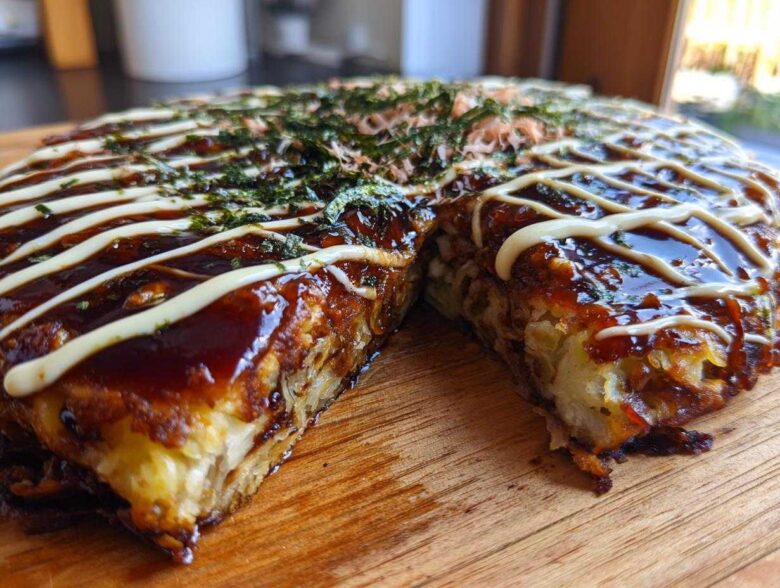
Oh man, have you ever walked down a busy street in Osaka? The air is thick with the most incredible, savory, almost smoky smell. That, my friend, is the Okonomiyaki calling your name! It’s pure, unadulterated Japanese comfort food packed into one beautiful, hearty pancake. Forget those sad, thin crepes; we are diving headfirst into the real deal: the classic **Okonomiyaki Cabbage Pancake**. Trust me, mastering the texture is everything—you want that perfectly crisp sear on the outside that gives way to a cloud-like, steaming interior.
I totally messed up my first few tries, ending up with something dense and sad. But after much trial and error (and probably eating way too much cabbage!), I cracked the code. This recipe cuts through the confusion. We are aiming for authenticity without needing to import an entire specialty grocer’s stock. Get ready, because by the time you finish this, you’ll have the definitive guide to making authentic, amazing Okonomiyaki right here in your own kitchen.
If you’re curious about who I am and why I’m so obsessed with Japanese comfort food, feel free to check out my little corner of the internet over at our About Us page! Now, let’s get cooking!
Why This Okonomiyaki Cabbage Pancake Recipe Works
When you’re trying to recreate street food at home, you need steps that are simple but effective. This Osaka style recipe cuts right to the chase. We focus on three things that make all the difference:
- Super easy batter that comes together in five minutes.
- A focus on achieving a genuinely fluffy interior—no dense bricks here!
- Ingredients you can actually find without a special trip overseas.
Achieving the Perfect Fluffy Okonomiyaki Cabbage Pancake Texture
That amazing fluffy texture in the Okonomiyaki Cabbage Pancake comes down to two little secrets. First, we use cold dashi stock—I mean really cold! This keeps the gluten in the flour from developing too quickly. Second, we mix the batter just until the flour disappears. Don’t beat it like you’re making a cake! Minimal mixing keeps those air bubbles locked in, ensuring your final pancake is light and airy inside, even with all that cabbage.
Gathering Ingredients for Your Osaka Style Okonomiyaki Cabbage Pancake
Alright, let’s talk about what goes into this magic. Making a truly great Okonomiyaki Cabbage Pancake starts long before it hits the hot pan. You need the right ratio of dry stuff to wet stuff, and you definitely need enough cabbage—we’re talking four heaping cups of shredded green cabbage here! Don’t skimp on the pork belly either; those thin strips are crucial for adding a little salty crispness throughout while they cook right on top.
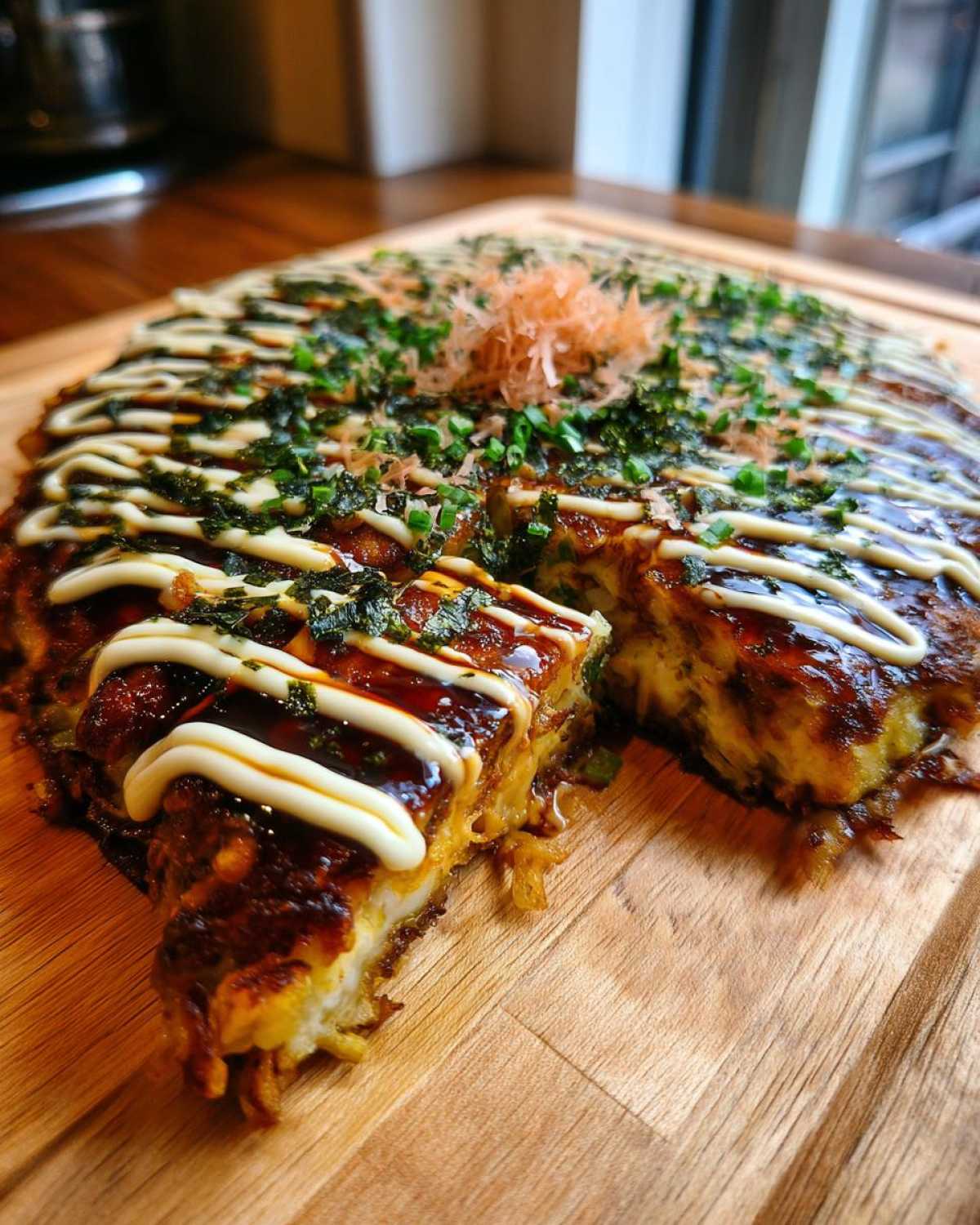
I always try to have all my ingredients prepped and sitting next to the stove before I even turn on the heat. This helps keep things calm when the cooking gets fast! If you’re looking for great dinner ideas that use up lots of vegetables, this is definitely it. Check out all my favorite dinner recipes while you’re gathering your bowls!
Ingredient Substitutions for Okonomiyaki Cabbage Pancake
You might see some recipes call for Nagaimo or Yamaimo yam, and yes, that adds amazing fluffiness, but honestly, don’t stress if you can’t find it! My recipe already boosts the fluff with baking powder, so skipping the yam entirely is totally fine for a home cook. For my vegetarian friends making the Okonomiyaki Cabbage Pancake, just swap out the pork belly for something flavorful like thick-cut shiitake mushrooms or just use extra cabbage for maximum veggie power. Easy substitutions keep these pancakes fun and accessible!
How to Make Okonomiyaki Cabbage Pancake: Step-by-Step Cooking Guide
Now we get to the fun part—the actual cooking! If you read my notes above, you know that timing and technique are everything here. We aren’t just dumping ingredients; we’re building a masterpiece! I’ve linked my full printable version, but pay close attention to the heat management; that’s what separates a good pancake from an incredible one. We want a solid golden crust without burning the cabbage inside!
Mixing the Okonomiyaki Cabbage Pancake Batter Correctly
First things first: grab a big bowl for your dry stuff—flour, baking powder, and salt all need a whisk together. Then, you are adding that crucial cold dashi and the egg. Mix it gently! And I mean gently. Seriously, stop mixing the second you don’t see any more dry flour streaks. Overmixing is the enemy of the fluffy Okonomiyaki Cabbage Pancake!
Flipping and Cooking the Okonomiyaki Cabbage Pancake
Get your skillet hot over medium heat and add a slick of oil. Pour in half your batter, making a nice, thick circle—think maybe 6 or 7 inches wide. Crucially, do NOT press it down with your spatula! Let the heat do the work. Lay your pork belly on top, wait 5 minutes until it’s golden underneath, and then flip it with confidence using two spatulas. Once the pork side is crisped (another 4-5 minutes), drop the heat to low, cover it up, and let that beautiful Okonomiyaki Cabbage Pancake steam through until the middle is perfectly cooked for another 5 to 7 minutes.
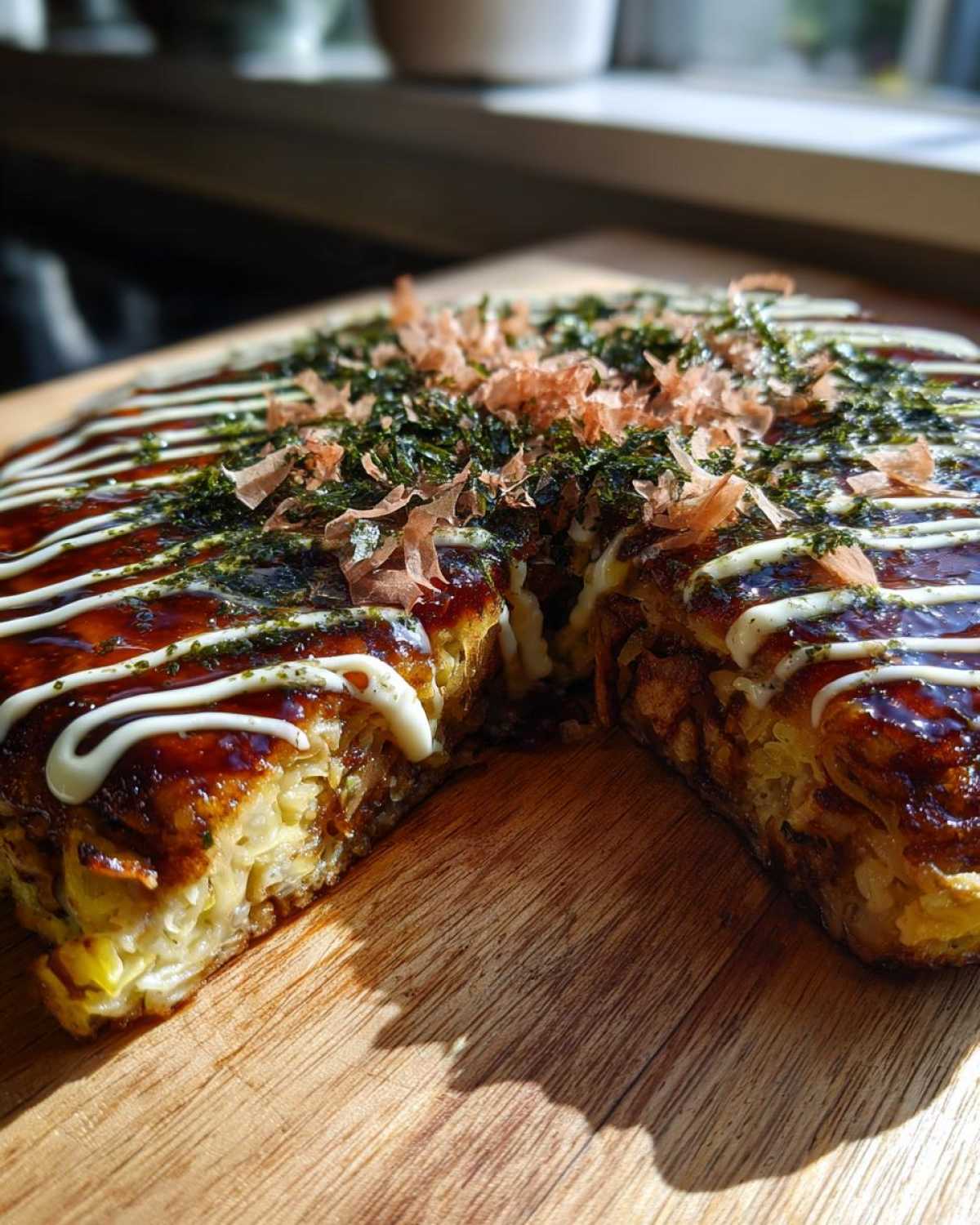
Essential Okonomiyaki Toppings Guide for Your Cabbage Pancake
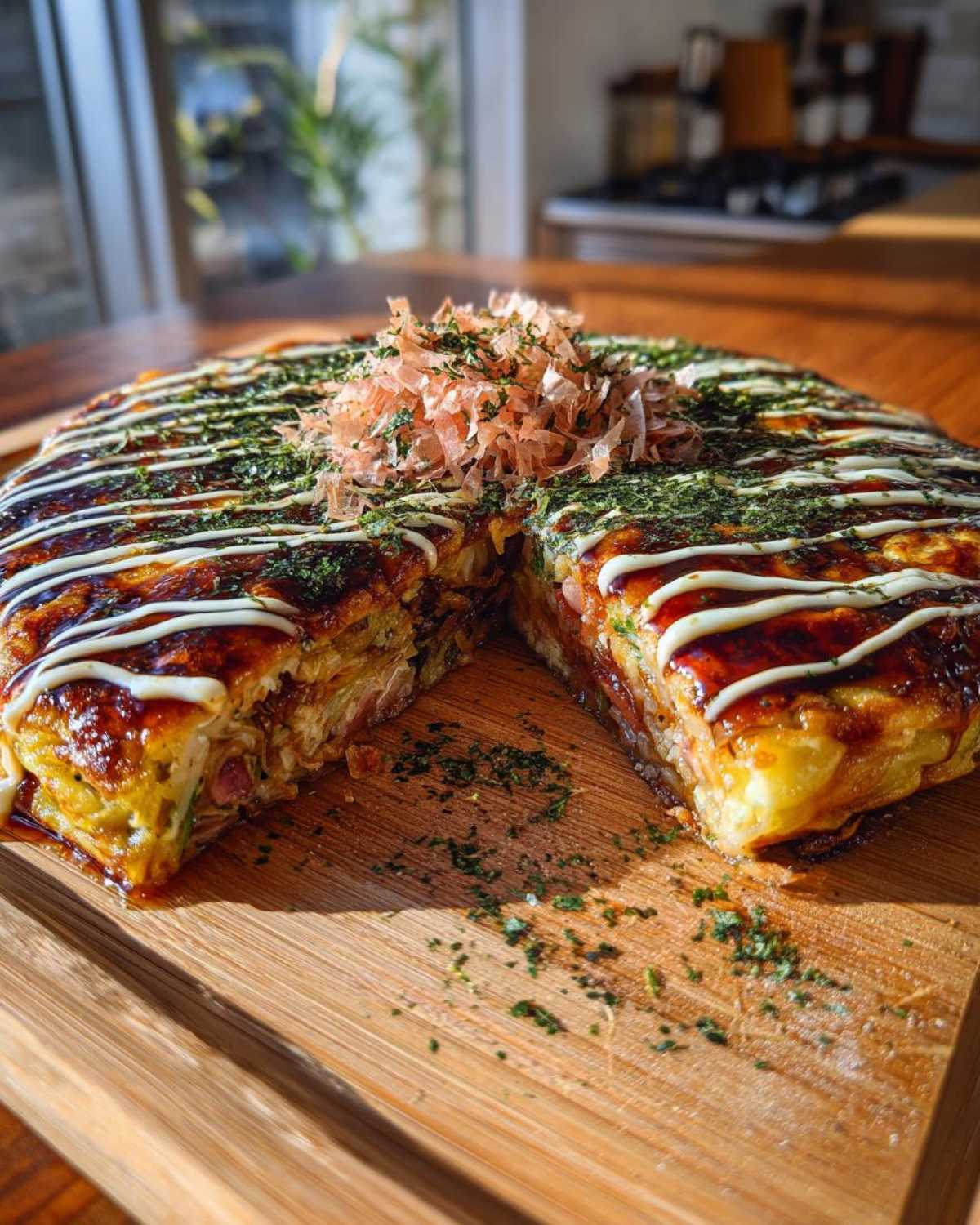
Okay, the pancake is cooked; it’s golden brown, it smells incredible, and you’ve managed the flip without disaster—yay! Now, we dress this beauty up because the toppings aren’t just decoration; they make the authentic Osaka experience. Once it’s off the heat, grab your Okonomiyaki sauce. You need a thick layer, spreading it right over the top surface of the Okonomiyaki Cabbage Pancake.
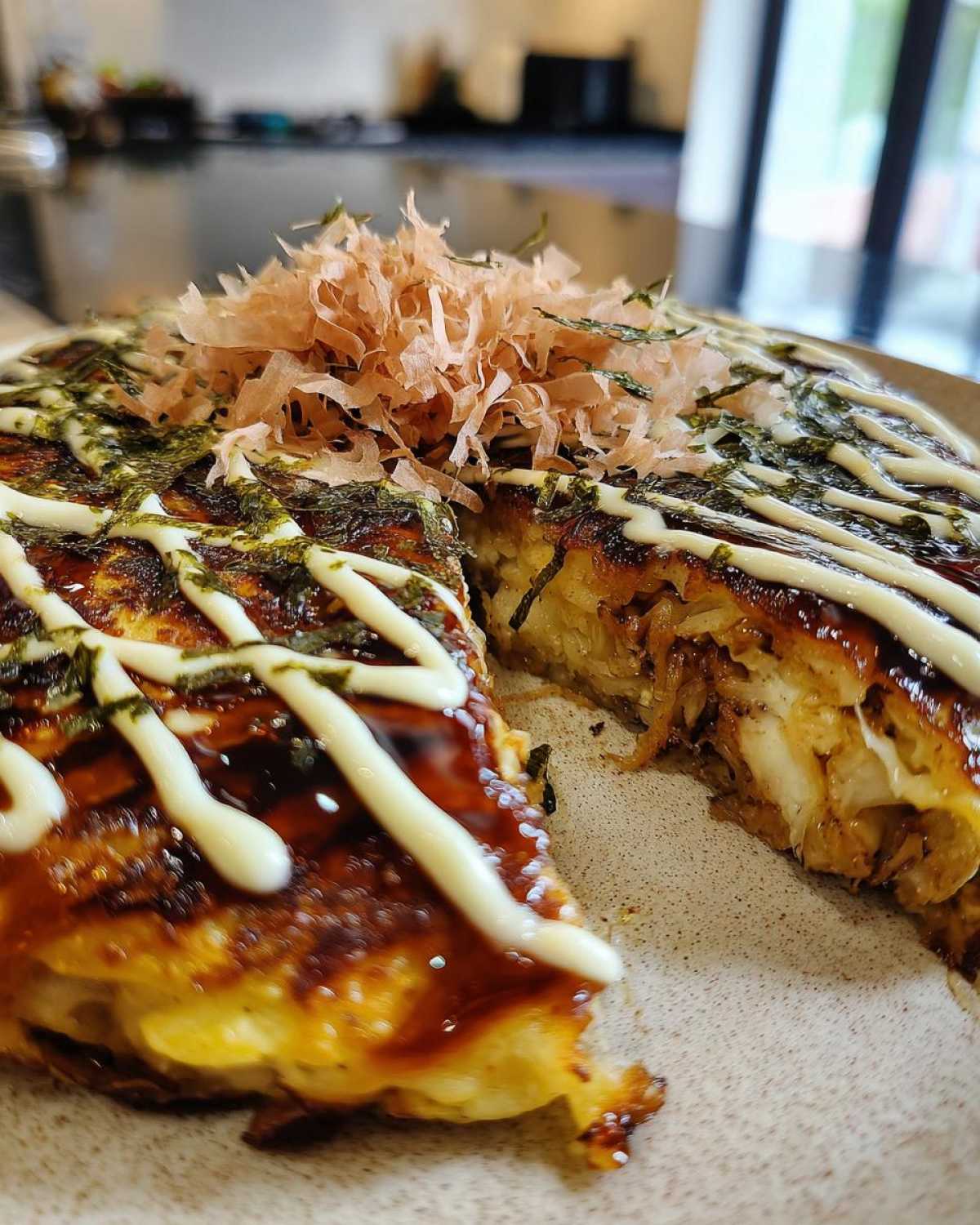
Next up is the mayonnaise! Don’t even try to use that big pale bottle from the fridge; you really want Japanese Kewpie mayo if you can swing it. It’s richer and sweeter. I always drizzle mine back and forth in those cool little stripes—it just looks right! Finally, let’s hit it with the texture and flavor bombs: a generous sprinkle of smoky Katsuobushi (bonito flakes) that will “dance” from the heat, and a dusting of green Aonori seaweed flakes. If you want to make that amazing sauce scratch, I have a recipe for homemade Okonomiyaki sauce right here!
Variations on the Classic Okonomiyaki Cabbage Pancake
Even though this recipe nails the Osaka style—the kind where everything gets mixed into one glorious batter—you might hear people talk about Hiroshima style pancakes. That’s totally different! Hiroshima Okonomiyaki is layered; they cook the crepe first, then the cabbage, then noodles, and finally top it all with an egg. It’s an adventure, but this Osaka style Okonomiyaki Cabbage Pancake is easier for a weeknight!
If you’re skipping the pork belly for a night, I mentioned the vegetarian alternative already, but it’s worth repeating! Using mushrooms or even adding some shredded cheese right into the batter layer before flipping makes this an incredible meatless meal. It really proves how versatile our favorite Okonomiyaki Cabbage Pancake can be!
Storage and Reheating Instructions for Leftover Okonomiyaki
I’m going to be honest with you: nothing beats this pancake fresh off the griddle. Those toppings are shimmering, and the inside is perfectly steamy! But hey, sometimes we have leftovers, and we need to handle them right.
If you have any left, pop it into an airtight container and stick it in the fridge for up to two days. When you are ready to eat it again, skip the microwave entirely—that thing makes everything soft! Your best bet is to warm it up in a dry skillet over medium heat. If you have a toaster oven, that works great too! You’re just trying to bring back that beautiful, crisp exterior we worked so hard for.
Frequently Asked Questions About Making Okonomiyaki Cabbage Pancake
I know you might have a few lingering doubts since this dish feels like such a special treat! That’s totally normal when tackling Japanese comfort food cooking for the first time. Here are the answers to the questions I get most often about getting these pancakes perfect at home. If you’re looking for more basics on easy Japanese meals, check out the tips on our Japanese savory pancake recipes page!
Can I use regular mayonnaise instead of Kewpie for my Okonomiyaki Cabbage Pancake?
You technically can, but honestly, it won’t taste the same! Regular mayo is tangier and thinner. Kewpie is richer and has a better sweetness that complements the sauce perfectly on your Okonomiyaki Cabbage Pancake.
What is Dashi stock and can I make Okonomiyaki without it?
Dashi is a foundational Japanese broth made from dried kelp and bonito flakes—it gives that deep umami flavor. If you don’t have any, mix 3/4 cup of water with just a tiny dash of soy sauce and maybe a pinch of instant bonito powder if you have it! It works for our Japanese savory pancake recipe.
How do I know when the center of the Okonomiyaki Cabbage Pancake is fully cooked?
When you flip it back to cook the second side, you should see steam noticeably puffing out from the sides. If you gently jiggle the pancake, it shouldn’t wobble excessively in the middle anymore. That softness means the inside is beautifully tender!
Estimated Nutritional Snapshot for This Okonomiyaki Cabbage Pancake
Making delicious food shouldn’t mean you have to guess what you’re eating! Now, this is just an estimate based on the standard ingredients, but it gives you a good ballpark for one pancake. Things like how much oil you use during frying or what kind of pork belly you choose will change these numbers, so think of this as a guide, not gospel.
For transparency, you can always check out my full nutrition disclaimer here. It’s important to know that these figures assume you are making the classic version with pork belly, not the vegetarian swap we talked about earlier!
- Serving Size: 1 pancake
- Calories: 550
- Fat: 30g
- Carbohydrates: 55g
- Protein: 22g
- Sugar: 18g (Mostly from the toppings, so use that sauce wisely!)
Share Your Okonomiyaki Cabbage Pancake Success
Whew! I am so proud of you for making your first authentic Japanese savory pancake! Now that you’ve mastered the sizzle, the flip, and piled on all those amazing toppings, I genuinely want to see what you’ve created. Did your Katsuobushi dance like crazy? Did you manage that mayonnaise drizzle perfectly?
Please don’t keep that culinary victory quiet! Head down to the comments section below and let me know how your Okonomiyaki Cabbage Pancake turned out. Give the recipe a rating if you loved it—it really helps other home cooks trust this guide!
If you snapped a picture of your beautiful creation, tag me on social media! I love seeing everyone’s results up close. You can always reach out about any lingering questions or other great dinner ideas over at my contact page. Happy cooking, and enjoy that amazing Osaka street food flavor at home!
PrintOsaka Style Okonomiyaki Cabbage Pancake
A straightforward recipe for making classic Osaka-style Okonomiyaki, a savory Japanese cabbage pancake, complete with instructions for essential toppings.
- Prep Time: 15 min
- Cook Time: 20 min
- Total Time: 35 min
- Yield: 2 servings
- Category: Dinner
- Method: Pan Frying
- Cuisine: Japanese
- Diet: Vegetarian
Ingredients
- 1 cup all-purpose flour
- 1 teaspoon baking powder
- 1/4 teaspoon salt
- 1 large egg
- 3/4 cup dashi stock (cold)
- 4 cups shredded green cabbage (about 1/2 medium head)
- 1/2 cup thinly sliced green onion
- 1/4 cup tenkasu (tempura scraps, optional)
- 4 ounces thinly sliced pork belly or bacon
- Vegetable oil for cooking
- For Topping: Okonomiyaki sauce
- For Topping: Japanese mayonnaise (Kewpie preferred)
- For Topping: Katsuobushi (bonito flakes)
- For Topping: Aonori (dried green seaweed flakes)
Instructions
- In a large bowl, whisk together the flour, baking powder, and salt.
- Add the egg and cold dashi stock to the dry ingredients. Mix lightly until just combined; do not overmix the batter.
- Fold in the shredded cabbage, green onion, and tenkasu (if using) into the batter. Mix gently until the ingredients are coated.
- Heat a large non-stick skillet or griddle over medium heat and add a small amount of oil.
- Pour half of the batter mixture onto the hot skillet, forming a thick circle about 6 to 7 inches wide. Do not press down on the batter.
- Arrange half of the sliced pork belly evenly over the top of the raw batter circle.
- Cook for 4 to 5 minutes until the bottom is golden brown.
- Carefully flip the pancake using two spatulas. Cook the pork side for another 4 to 5 minutes until the pork is crisp.
- Reduce the heat to low, cover the skillet, and cook for an additional 5 to 7 minutes to ensure the center is cooked through and fluffy.
- Remove the pancake from the heat. Spread a generous layer of Okonomiyaki sauce over the top.
- Drizzle with Japanese mayonnaise in a back-and-forth pattern.
- Sprinkle with Katsuobushi and Aonori before serving immediately. Repeat steps 4 through 11 for the second pancake.
Notes
- If you cannot find nagaimo yam (yamaimo), skip it; the baking powder and proper mixing technique will help achieve fluffiness.
- For a vegetarian version, omit the pork belly and substitute with sliced mushrooms or extra cabbage.
- Use cold dashi stock; this helps keep the batter light.
- Cook on medium-low heat after the initial sear to cook the center without burning the outside.
Nutrition
- Serving Size: 1 pancake
- Calories: 550
- Sugar: 18
- Sodium: 850
- Fat: 30
- Saturated Fat: 10
- Unsaturated Fat: 20
- Trans Fat: 0
- Carbohydrates: 55
- Fiber: 6
- Protein: 22
- Cholesterol: 120