

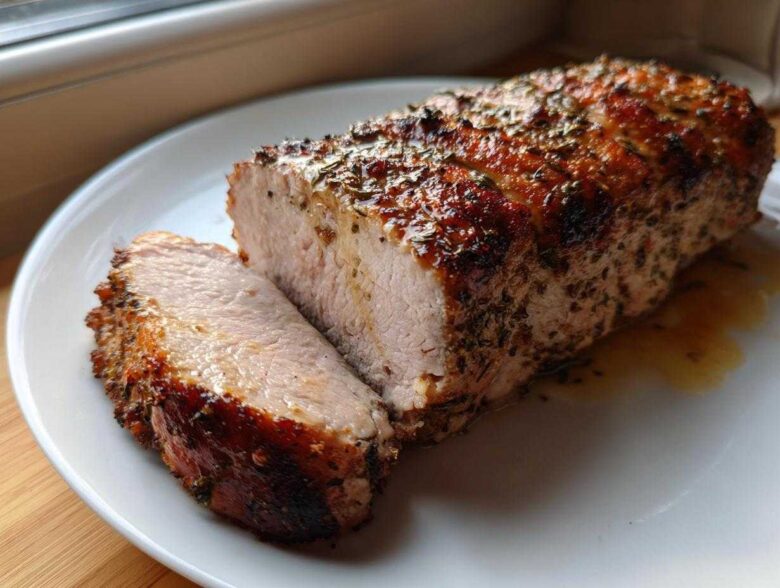
If you’ve ever sliced open a roast pork only to find it dry and disappointing, Chloe and I totally get it. That used to be me! I was so focused on following every single instruction that I missed the simple things that make the meat tender. But folks, I’ve cracked the code, and it’s shockingly easy. This recipe for pork loin roast is my structured approach combined with Chloe’s insistence on flavor, making it the most reliable recipe we have for getting that perfectly juicy interior every single time. Whether you’re aiming for a fast weeknight dinner or you want something impressive for your Sunday roast, this method delivers. We ditched the crazy rubs and long brines, focusing only on what truly matters for texture and taste. Trust me, when you nail that temperature, you’ll never look back.
Why This Juicy Pork Loin Roast Recipe Works Every Time
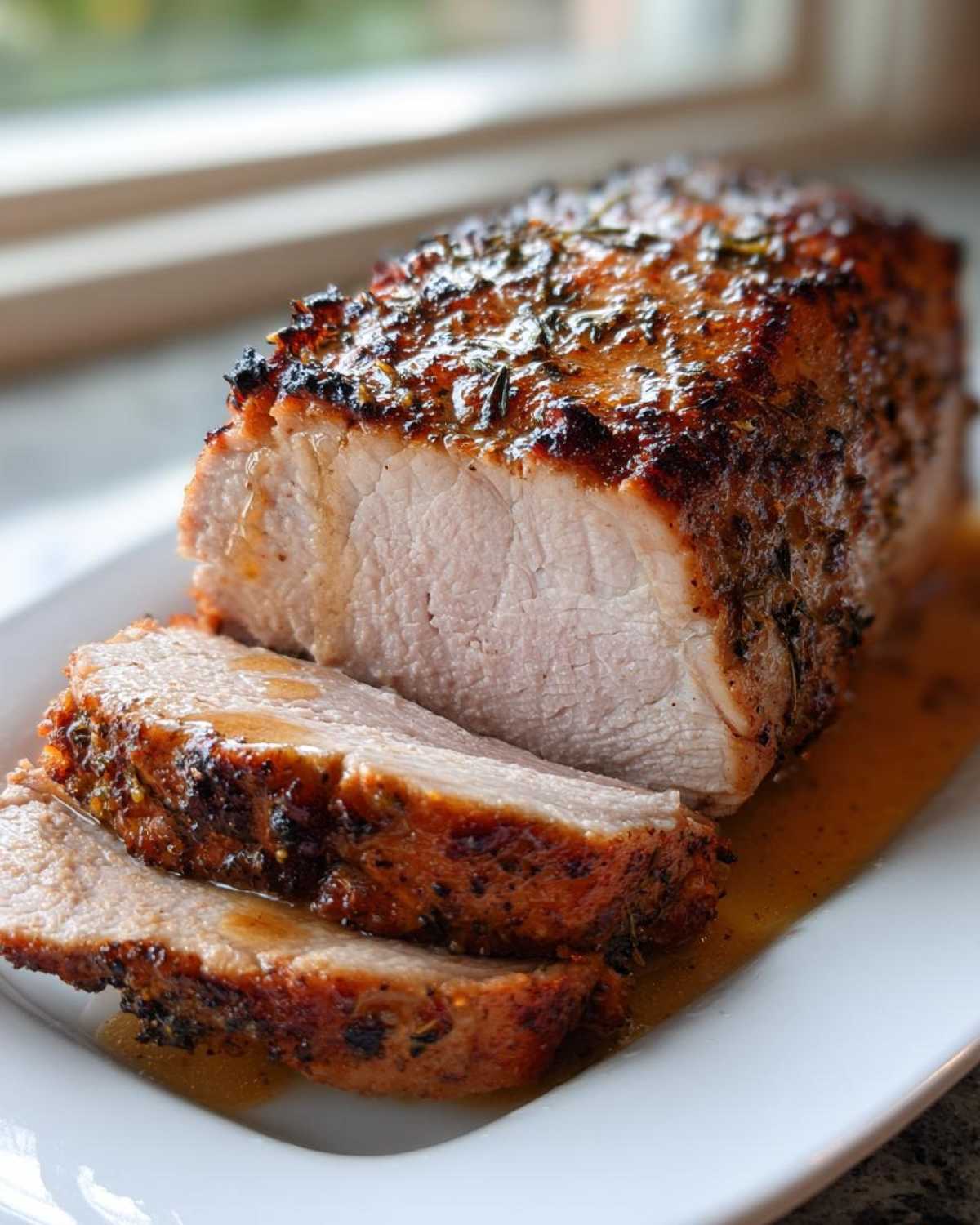
The magic here really comes from physics, which I, as the planner, absolutely love! We start with a quick blast of high heat—400 degrees Fahrenheit for those first 15 minutes. That shock sets up a beautiful, savory crust on the outside, which is what you want for flavor. Then, we immediately back off. Dropping it down to 350 degrees allows the center to cook evenly without drying out before the outside burns. Patting the meat completely dry before seasoning is my non-negotiable step; moisture creates steam, and steam prevents that glorious crust. Follow this two-step temperature dance, and you are guaranteed to get a truly juicy pork loin.
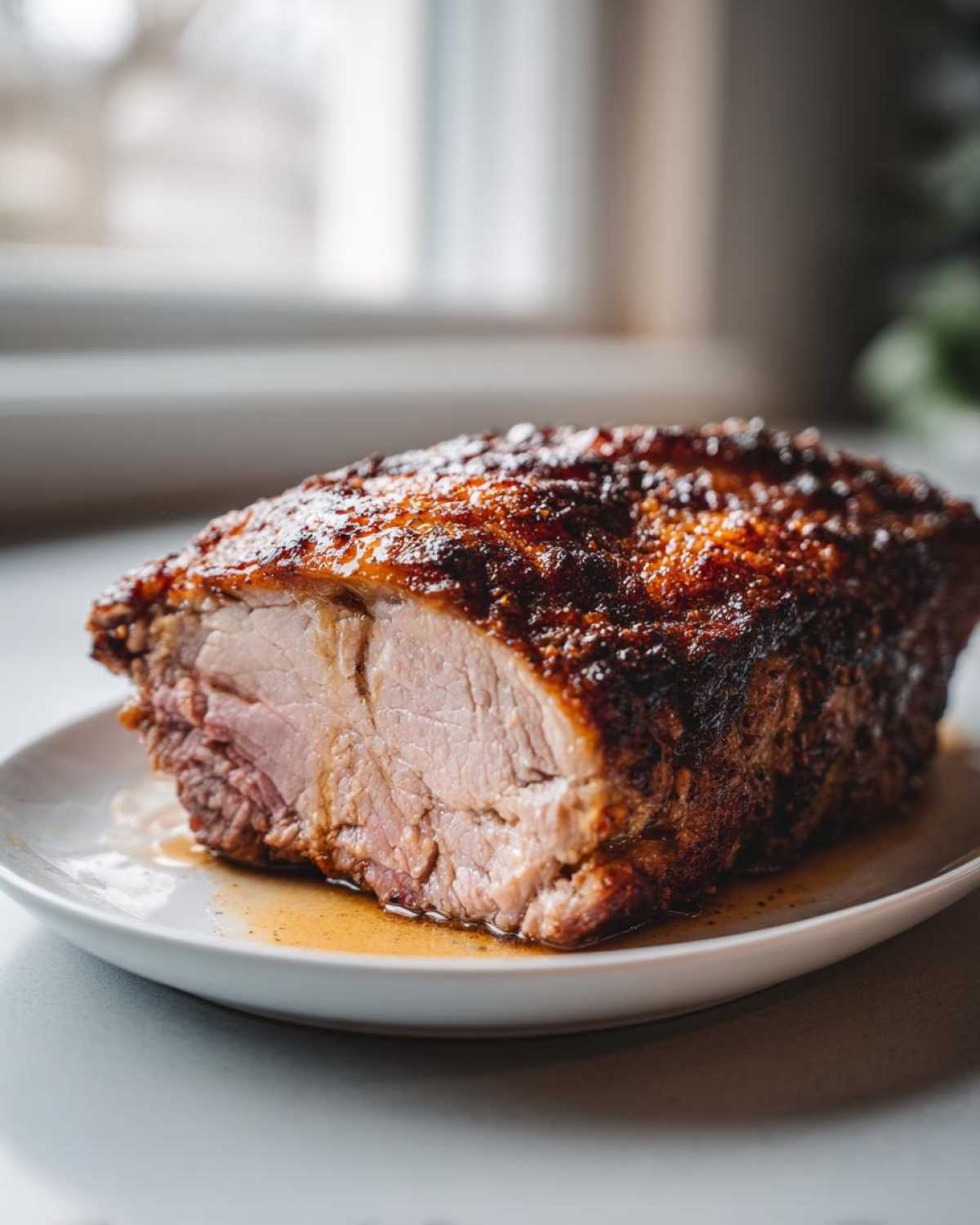
The Secret to Perfect Pork Loin Internal Temp
Listen, this is where Chloe gets nervous, but I insist! For safety, the USDA recommends 145 degrees Fahrenheit for pork, and honestly, that temperature gives you the most beautifully tender result. Don’t be tempted to cook it until brown juices run out; that means you’ve overshot the mark! You absolutely need an instant-read thermometer. It’s not cheating; it’s being accurate so nobody worries about eating pork. Pull that roast out the second the display reads 145°F. If you trust the thermometer, you trust the roast every time.
Ingredients for Your Simple Pork Loin Roast
This is the part where my organizational brain shines! Look at this list—it’s short, it’s basic, and it focuses on building flavor right on the surface of the meat without needing hours of marinating. When Chloe sees a list this manageable, she usually volunteers to be the sous chef! We are keeping the trimming simple, using good quality salt, and relying on those classic, earthy herbs that always pair perfectly with pork. You’ll need a 3-pound roast to make sure you get those great leftovers for an easy pork dinner later in the week. Don’t stress about finding niche items; everything here is easy to locate.
Ingredient Notes and Substitutions for Your Pork Loin Roast
A quick note on getting that herb flavor right! If your spice cabinet is looking a little bare, that’s okay. We’ve all been there. Feel free to swap the individual rosemary and thyme for about one tablespoon of dried Italian seasoning mix; it gives you that great savory depth without making an extra trip to the store. Also, remember that note in the recipe details: if you have time, pull that pork loin roast out of the fridge about 30 minutes before you start seasoning. Letting those herbs sit on the room-temperature meat helps them adhere better and start flavoring the surface before the heat hits!
Step-by-Step Instructions for Oven Roasted Pork
Okay, let’s get this oven roasted pork in the heat! Remember how I talked about the two-temperature blast? This is where we put that plan into action. First things first: 400 degrees! Crank that oven up. While it’s heating, make sure you’ve patted that roast bone-dry and rubbed it down with oil and all those lovely herbs and salt we mixed up. We need that initial high heat for that gorgeous, brown crust—it’s what makes the outside so satisfyingly flavorful.
- Pop that seasoned roast in the oven at 400°F for exactly 15 minutes. Set your timer! Chaos can reign in other parts of the kitchen, but not during this initial sear.
- Once the timer buzzes, don’t panic. Reduce the oven temperature right down to 350°F. Now, we settle in for the long, slow cook toward perfection.
- Keep an eye on your thermometer. The recipe estimates about 20–25 minutes per pound once you hit 350°, but seriously, don’t rely on time alone. That thermometer is your best friend, guiding you straight to 145°F. If you want to check out more on roasting techniques, I wrote a little something detailing a similar process for prime rib that might help if you ever need inspiration for another roast!
Crucial Resting Time for the Pork Loin Roast
This is the step I used to skip, and that’s why my pork was always tough! When you pull that roast out at 145 degrees, the juices inside are practically vibrating; they need time to relax and redistribute throughout the meat. Transfer the roast to a clean cutting board immediately, grab a piece of foil, and tent it loosely over the top. That means laying the foil over it like a little hat, not wrapping it tight like a mummy! You must give it at least 10 to 15 minutes. If you slice sooner, that moisture runs out onto the board instead of staying in your tender slices. It’s non-negotiable for that promised juiciness!
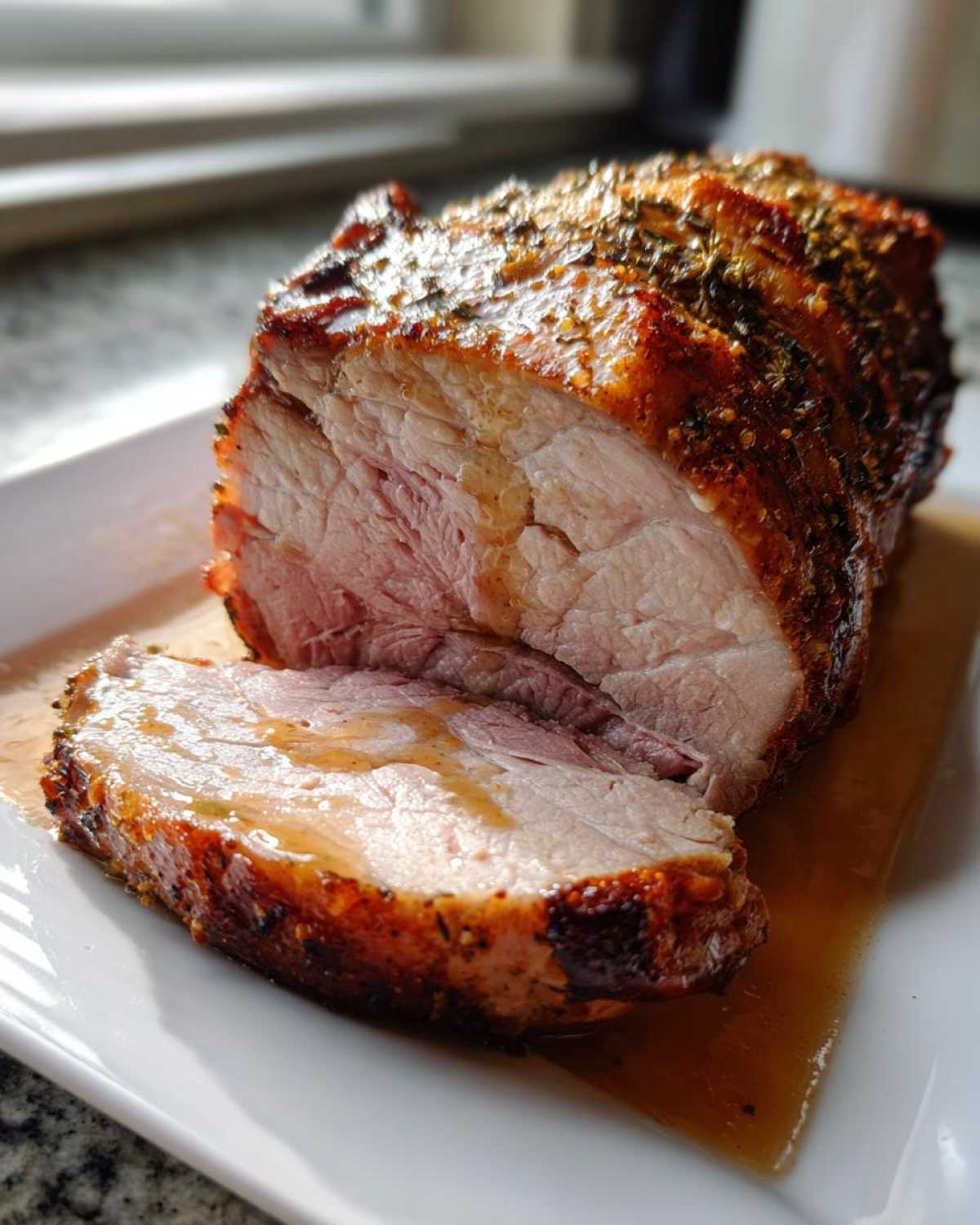
Making a Quick Pan Sauce Gravy for Your Pork Loin Roast
You’ve rested your beautiful pork loin roast, and now the pan drippings are calling your name! Don’t let those flavorful brown bits go to waste—that’s pure gold for making the best, speediest pan sauce gravy you can imagine. While your pork is relaxing, move the roasting pan right onto the stovetop over medium heat. Chloe always tells me that this step is almost as satisfying as the roasting itself because the flavor is so immediate.
Pour in about a cup of chicken broth. Now, grab a sturdy wooden spoon or spatula and scrape up every single caramelized bit stuck to the bottom of the pan. That’s where the deep flavor lives! Let that simmer and reduce down just a bit for maybe three to five minutes until it thickens slightly. A squeeze of lemon juice at the end is my little secret for brightness. If you want something even faster sometime, check out our recipe for quick chicken gravy, but honestly, using the roast drippings wins every time for incredible pork flavor!
Tips for the Best Weeknight Dinner Pork Loin Roast
I totally understand that sometimes the weeknight schedule just doesn’t allow for a long, slow cook, even if this recipe is simple! The good news is that this pork loin roast cooks fairly quickly, making it a stellar choice for an easy pork dinner when you need something satisfying on the table fast. Because the initial sear is short, the total active cooking time stays low. If you want to sneak in a little extra flavor without much effort, use the searing tip from the notes! Grab an oven-safe skillet, heat it up with a splash of oil, and just quickly brown the seasoned roast on all the flat sides for about two minutes each before popping the whole skillet right into the preheated 400-degree oven. It adds just three minutes of work but gives you a much more developed crust!
Serving Suggestions for Your Sunday Roast Recipe
When you’re pulling off a beautiful Sunday roast recipe like this, the side dishes really complete the whole picture, right? Chloe and I keep things simple because we want the pork to be the star, but here are a couple of reliable partners that always make it onto our table after the meat rests.
First off, you can’t go wrong with roasted potatoes. We just toss baby potatoes in whatever rosemary and garlic powder we have left from the rub, drizzle with a little oil, and toss them directly into the roasting pan or onto a sheet pan alongside everything else during that 350-degree phase. They soak up all those lovely herb juices and get crispy on the edges.
Secondly, we always try to get some green on the plate. Roasted asparagus or green beans are perfect because they cook fast. If you need an idea for veggies, you should check out our recipe for garlic and herb roasted vegetables—it’s foolproof and uses similar spices, so the flavors are totally harmonious.
If you’re going for maximum comfort, mashed potatoes are amazing for soaking up that pan sauce gravy we just made. Keep it easy, keep it delicious—that’s the rule for a celebratory Sunday meal that won’t take all day!
Storage and Reheating Your Leftover Pork Loin Roast
Because this pork loin roast is naturally so juicy, it actually reheats wonderfully if you keep a couple of things in mind. Store any leftovers in an airtight container in the fridge; honestly, it stays perfectly good for three or maybe four days. When you’re ready for round two, the key is moisture!
I highly recommend slicing the leftover pork thinly against the grain first. Never reheat thick slices whole, as they dry out fast. Before putting them in a skillet or the microwave, add just a tiny splash of chicken broth—maybe a tablespoon per serving—or drizzle some of that leftover pan sauce over the slices. Heat it gently, just until warm through, not piping hot. That little bit of added liquid keeps the meat incredibly tender for your next easy pork dinner!
Frequently Asked Questions About the Pork Loin Roast
Can I cook this pork loin roast from frozen?
Oh boy, I wouldn’t recommend it, especially when we are chasing that perfect internal temp! Cooking from frozen means the outside will cook way too fast trying to compensate for the frozen center. You’ll end up with a dry, tough exterior and a cold middle. For the best results as an easy pork dinner, let your roast thaw completely in the fridge overnight—that’s the safest route. If you’re in a real pinch, you can start it thawed but cook it at 350 degrees for the entire time, extending the cook time significantly, but you won’t get that nice crust we talked about!
What if I don’t have rosemary? Can I skip it or substitute?
Chloe says skip it at your own peril because rosemary and pork are just heaven together, but I understand pantry limitations! If you don’t have fresh or dried rosemary, go ahead and use an extra half teaspoon of dried thyme, or, even better, throw in a teaspoon of dried sage. Sage is fantastic with pork. You can also use one tablespoon of a good general-purpose poultry seasoning mix if that’s lying around. Just aim for that earthy, savory herb profile. If you’re looking for more general cooking inspiration, feel free to poke around our main blog page!
How do I know my pork loin internal temp is perfectly accurate?
This question comes up a lot, and it’s critical for getting that juicy pork loin! Accuracy comes down to technique when using your instant-read thermometer. Make sure you are inserting the probe horizontally into the absolute thickest part of the meat, making sure you are not touching any bone (if your roast has one) or hitting the roasting pan underneath. If you hit bone, it will read hotter than the meat, giving you a false sense of security that it’s done when it’s actually still raw near the center. Stick it deep, check the number, and trust the tool!
Is this a good recipe for an easy pork dinner during the week?
Absolutely! This is one of the fastest roasts we have in our entire collection, making it a fantastic contender for a busy night. Once it’s seasoned up (which takes about 5 minutes), the active cooking time is just the 15 minutes at the high temp plus the time spent at 350. If you have about an hour of oven time available, you can certainly pull this off. The best part is the pan sauce gravy comes together in the 15 minutes the pork is resting, so everything lands on the table hot and ready at the same time. It really streamlines your evening!
Nutritional Estimate for This Easy Pork Dinner
Because Chloe and I believe in transparency, we always try to provide a general idea of what’s in the food we share, even though we aren’t registered dietitians! Remember, this information relies heavily on the exact ingredients, fat content of the cut, and portion sizes you use, so consider this a helpful guideline for planning your easy pork dinner.
Based on our recipe using a 3 lb trimmed pork loin roast, divided into 6 servings, here are the general estimates:
- Calories: Approximately 320 per serving
- Total Fat: About 14g (with 5g being saturated fat)
- Protein: A whopping 45g! This is why we love lean roasts for bulking up a meal.
- Carbohydrates: Very low, just about 1g.
- Sodium: Roughly 450mg (this will change based on how heavily you salt the rub!)
We try to keep things simple and clean in our kitchen, which is why the carb count is so low, and the protein is high. As always, if you are following a strict dietary plan, please run these numbers through your own tracking system! You can read more about how we source our nutritional information on our official disclaimer page if you’re curious about the methodology!
PrintJuicy Oven Roasted Pork Loin Roast
Follow this simple recipe for a tender and juicy pork loin roast cooked perfectly in the oven, complete with guidance for internal temperature and a quick pan sauce.
- Prep Time: 10 min
- Cook Time: 75 min
- Total Time: 85 min
- Yield: 6 servings
- Category: Dinner
- Method: Oven Roasting
- Cuisine: American
- Diet: Low Fat
Ingredients
- 3 lb pork loin roast, trimmed
- 2 tablespoons olive oil
- 1 tablespoon kosher salt
- 1 teaspoon black pepper
- 1 teaspoon garlic powder
- 1 teaspoon dried rosemary
- 1/2 teaspoon dried thyme
Instructions
- Preheat your oven to 400 degrees Fahrenheit.
- Pat the pork loin roast completely dry with paper towels. This helps create a nice crust.
- In a small bowl, mix together the kosher salt, black pepper, garlic powder, dried rosemary, and dried thyme.
- Rub the olive oil all over the pork loin roast.
- Sprinkle the seasoning mix evenly over the entire surface of the pork, pressing it in gently.
- Place the seasoned pork loin roast in a roasting pan or on a rimmed baking sheet.
- Roast for 15 minutes at 400 degrees Fahrenheit.
- Reduce the oven temperature to 350 degrees Fahrenheit and continue roasting.
- Roast until an instant-read thermometer inserted into the thickest part of the roast reads 145 degrees Fahrenheit. This usually takes about 20-25 minutes per pound total cooking time, but always rely on the temperature.
- Remove the pork loin roast from the oven when it reaches 145 degrees Fahrenheit internal temp.
- Transfer the roast to a cutting board, tent it loosely with foil, and let it rest for at least 10 to 15 minutes before slicing. This resting time is key for a juicy pork loin.
- While the pork rests, make a quick pan sauce: Place the roasting pan over medium heat on the stovetop. Add 1 cup of chicken broth to the pan drippings, scraping up any browned bits from the bottom. Let it simmer for 3-5 minutes until slightly reduced. Taste and add salt or pepper if needed.
- Slice the pork loin against the grain into thick pieces and serve immediately with the pan sauce gravy.
Notes
- For the best results, take the pork out of the refrigerator about 30 minutes before you plan to season and cook it.
- If you prefer a deeper crust, you can sear the roast in an oven-safe skillet with a tablespoon of oil over medium-high heat for 2-3 minutes per side before putting it in the oven.
- If you do not have fresh herbs, you can use 1 tablespoon of dried Italian seasoning instead of rosemary and thyme.
Nutrition
- Serving Size: 4 oz cooked
- Calories: 320
- Sugar: 1
- Sodium: 450
- Fat: 14
- Saturated Fat: 5
- Unsaturated Fat: 9
- Trans Fat: 0
- Carbohydrates: 1
- Fiber: 0
- Protein: 45
- Cholesterol: 110