

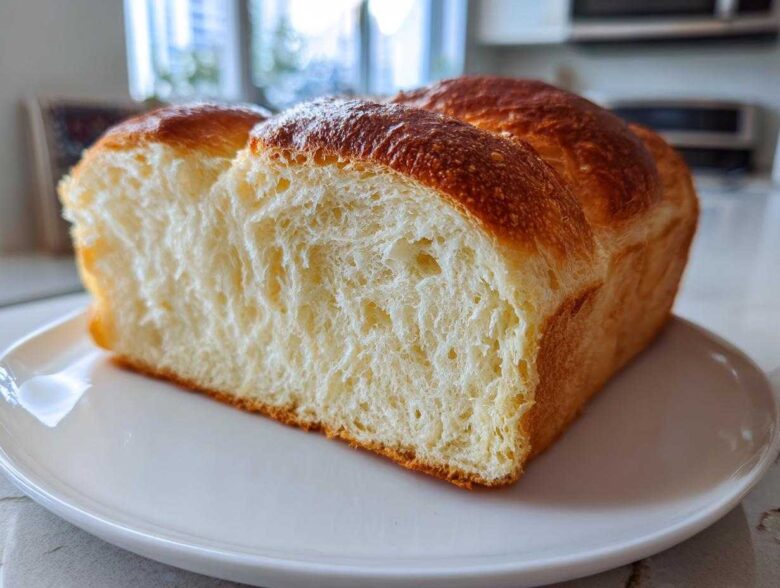
Forget everything you think you know about regular sandwich bread! Trying to get that cloud-like, airy softness outside of a professional Asian bakery feels impossible until you discover this trick. I’m here to tell you that making restaurant-quality, unbelievably soft **japanese milk bread** right in your own kitchen is absolutely doable. No weird equipment needed, honestly! We’re using the Tangzhong method, and trust me, once you see how this creamy starter works its magic, you’ll wonder why you waited so long. This recipe gives you that incredible, pillowy crumb that stays fresh for days. You can definitely master this if I can. For more on what makes our recipes so reliable, check out how we approach baking over at our About Us page!
Why This Ultimate Fluffy Japanese Milk Bread Recipe Works
This isn’t just another white bread recipe, folks. This is built for ultimate softness and it actually lasts longer than one day! That’s the dream, right? Here’s why we see such amazing results every time:
- Guaranteed pillowy texture that begs to be squished.
- Stays fresh for days, perfect for school lunches or lazy weekend toast.
- It gives you that unmistakable feel of true Mochi Texture Bread quality.
Achieving Mochi Texture Bread with Tangzhong
So, what’s the secret weapon? It’s the Tangzhong! Think of it as a sweet pre-cooked paste made from some of your milk and flour. It gelatinizes the starch before the actual baking starts. This means the flour can absorb way more liquid than usual without making the dough sloppy. That extra liquid is what locks in moisture and gives our japanese milk bread that signature, almost cloud-like, tender chew.
Tips for Soft Homemade Bread Success
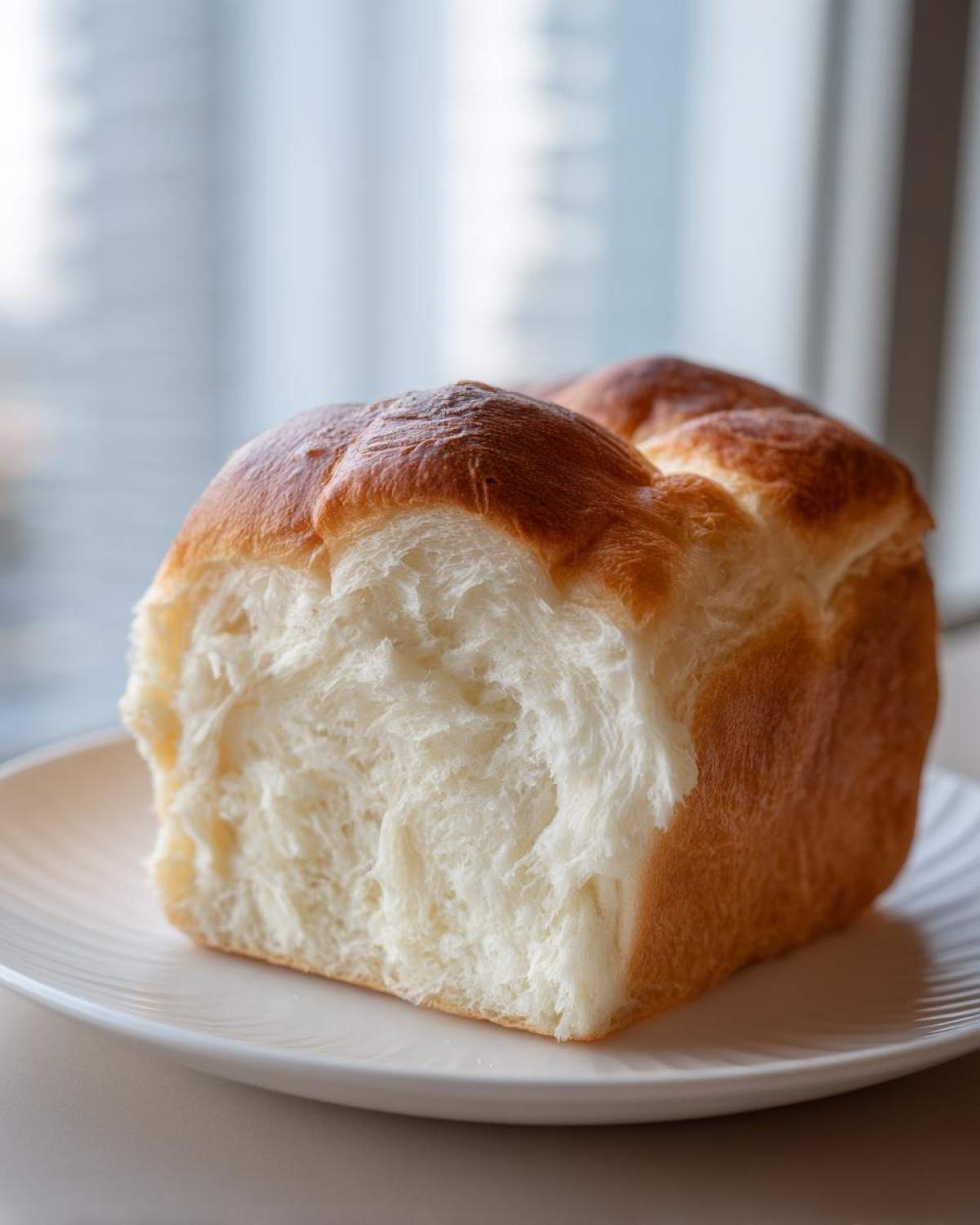
Beyond the paste, a couple of things make a huge difference for that Soft Homemade Bread perfection. First, don’t rush the kneading—we need that strong, smooth gluten network! Second, make sure your butter is truly soft but not melted when you add it in. If it’s too cold, it won’t mix in; if it’s too warm, you deflate all your air pockets. Patience here pays off big time in texture!
Essential Ingredients for Authentic Japanese Milk Bread
Okay, let’s talk about what goes into this magic. With the Tangzhong already made, the main dough ingredients are surprisingly simple, but quality really matters! We are making one single, glorious loaf, so measuring precisely is key here. You’re going to need 250 grams of bread flour—and yes, I insist on bread flour! That high protein content is what helps us achieve real structure in our japanese milk bread dough.
Here is what you’ll be combining with your prepared Tangzhong paste, lukewarm milk, and that one egg you whisked up:
- 250g Bread Flour (for the main dough, remember!)
- 30g Granulated Sugar
- 1/2 tsp Salt
- 60ml Whole Milk, lukewarm
- 30g Unsalted Butter, softened
Since we are using a pre-made paste, we only need a little bit of additional liquid. I always grab my ingredients and line them up before I even turn on the stove for the paste—it’s just less chaotic that way!
If you’re interested in other staple bread recipes, you should definitely check out my favorite way to make garlic butter naan bread sometime!
Ingredient Notes and Substitutions for Japanese Milk Bread
You can’t just toss in any old yeast here. We are using Instant Yeast because it can be mixed directly into the dry ingredients without needing pre-activation in water (though we use a bit of milk to wake it up, which is fine!). If you only have Active Dry Yeast, just take an extra five minutes to bloom it properly in that lukewarm milk until it looks foamy. Dead yeast means a sad, flat loaf, and we aren’t having that!
The butter needs to be room temperature soft, almost creamy, but not oily. If you try to mix in cold, hard chunks, your mixer will struggle and you’ll end up tearing the gluten network we worked so hard to build during kneading. Seriously, plan ahead and take the butter out about an hour before you start mixing the dough!
Tangzhong Bread Tutorial: Step-by-Step Instructions
This is where the magic really happens! Don’t be intimidated by the paste; it’s actually fun to watch it transform. Getting the timing right on this first step ensures you’ve got a perfect base for an unbelievably soft loaf. If you want to skip the hands-on kneading later, I highly recommend checking out my notes on easy no-knead methods, although for this japanese milk bread, kneading just pays off big time.
Making the Tangzhong Paste
First things first: the paste! Grab a small saucepan. Whisk about 60 grams of your milk with 30 grams of bread flour right in there—keep whisking constantly over medium-low heat. You’re looking for it to thicken up like a pudding. Once it coats the back of your spoon, meaning if you run your finger across the back, the line stays put, you’ve hit the magic zone, which is usually around 170°F or 77°C. Pull it off the heat immediately and let this cool down COMPLETELY before you try to mix it with the rest of your dough. Seriously, if it’s warm, it messes with the yeast.
Mixing and Kneading the Japanese Milk Bread Dough
Once the paste is chill, find your big bowl. Whisk the dry flour and the sugar, then toss in the salt. Next, add your cooled Tangzhong, your yeast mixture, and that lightly beaten egg. Mix it low and slow until it just comes together into a shaggy mess. Now, we knead! After about five minutes, start feeding that softened butter in slowly, piece by piece. Wait until one piece melts in before adding the next. Keep kneading for another 10 to 15 minutes. You’ll know you’re done when the dough goes from sticky and rough to looking smooth and elastic. That perfect, stretchy dough that passes the windowpane test? That’s what guarantees you get that amazing, light, pillowy loaf recipe structure.
Proofing and Shaping Your Shokupan Recipe
Time for the dough to relax! Oil your bowl, pop the dough in, cover it up, and let it double—usually about an hour and a half in a warm spot. Gentle handling is key here! Once it’s doubled, gently punch it down and divide it into three equal bits. Roll each piece into a tight little ball, cover them, and let them hang out for just 15 minutes—this relaxes the gluten before the final roll. Now, roll each ball into a log shape and tuck them side-by-side into your greased 9×5 pan. Cover again and let it rise a second time until the dough crowns about one inch over the very top edge of the pan. Don’t let it overproof here, or it’ll collapse in the oven!
Baking and Cooling the Fluffy Bread Baking Loaf
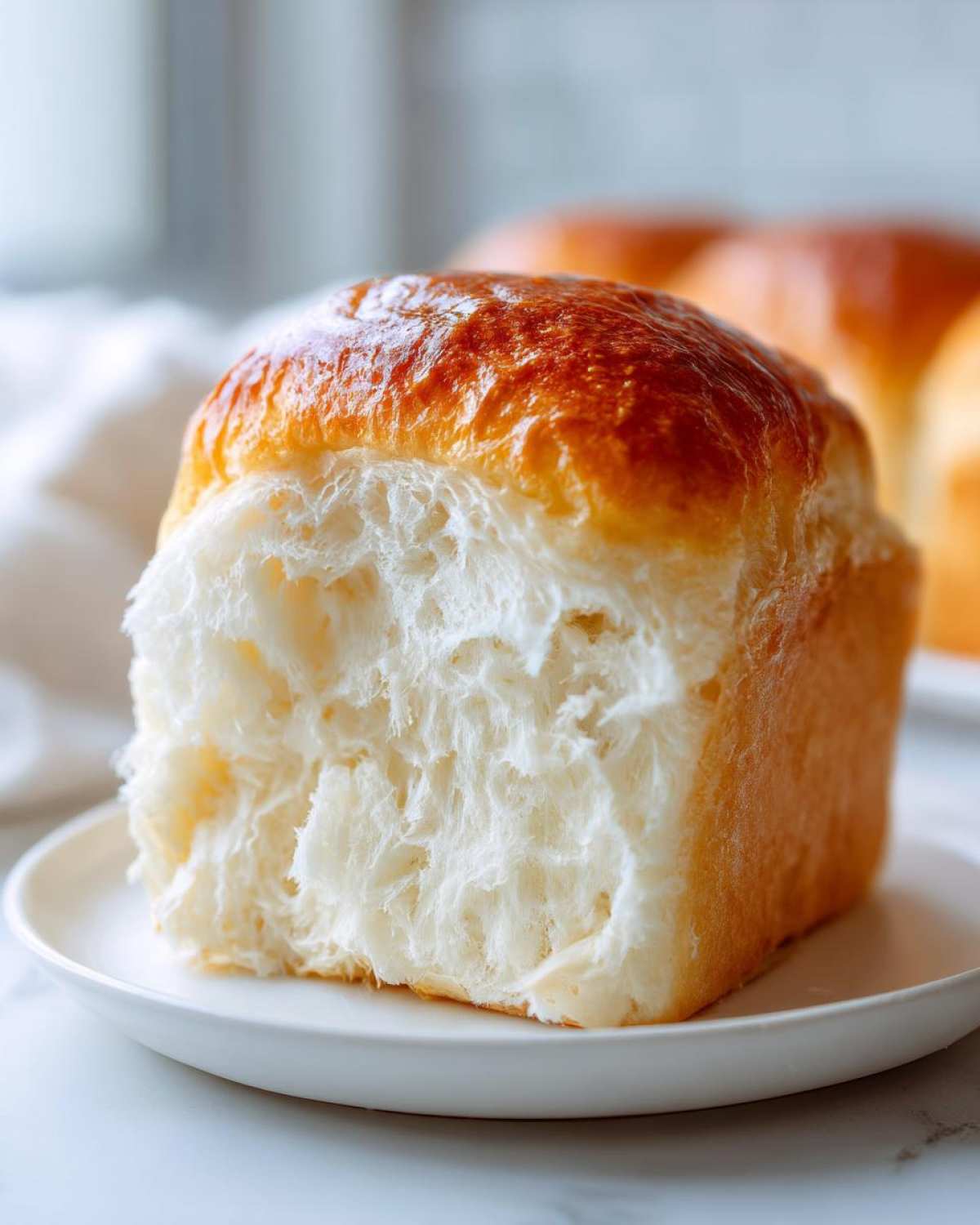
Get your oven hot—preheat to 350°F (175°C). Before it goes in, brush the top softly with a little milk or an egg wash for that gorgeous golden shine we see in the bakeries. Bake it for 30 to 35 minutes. You want that internal temp to hit around 200°F (93°C). The second it comes out, you MUST remove the loaf from the hot pan immediately! If you leave it in the pan, the trapped steam will make the bottom crust soggy and sticky, and we worked too hard for that glorious Fluffy Bread Baking result!
Tips for Success with Your Japanese Milk Bread
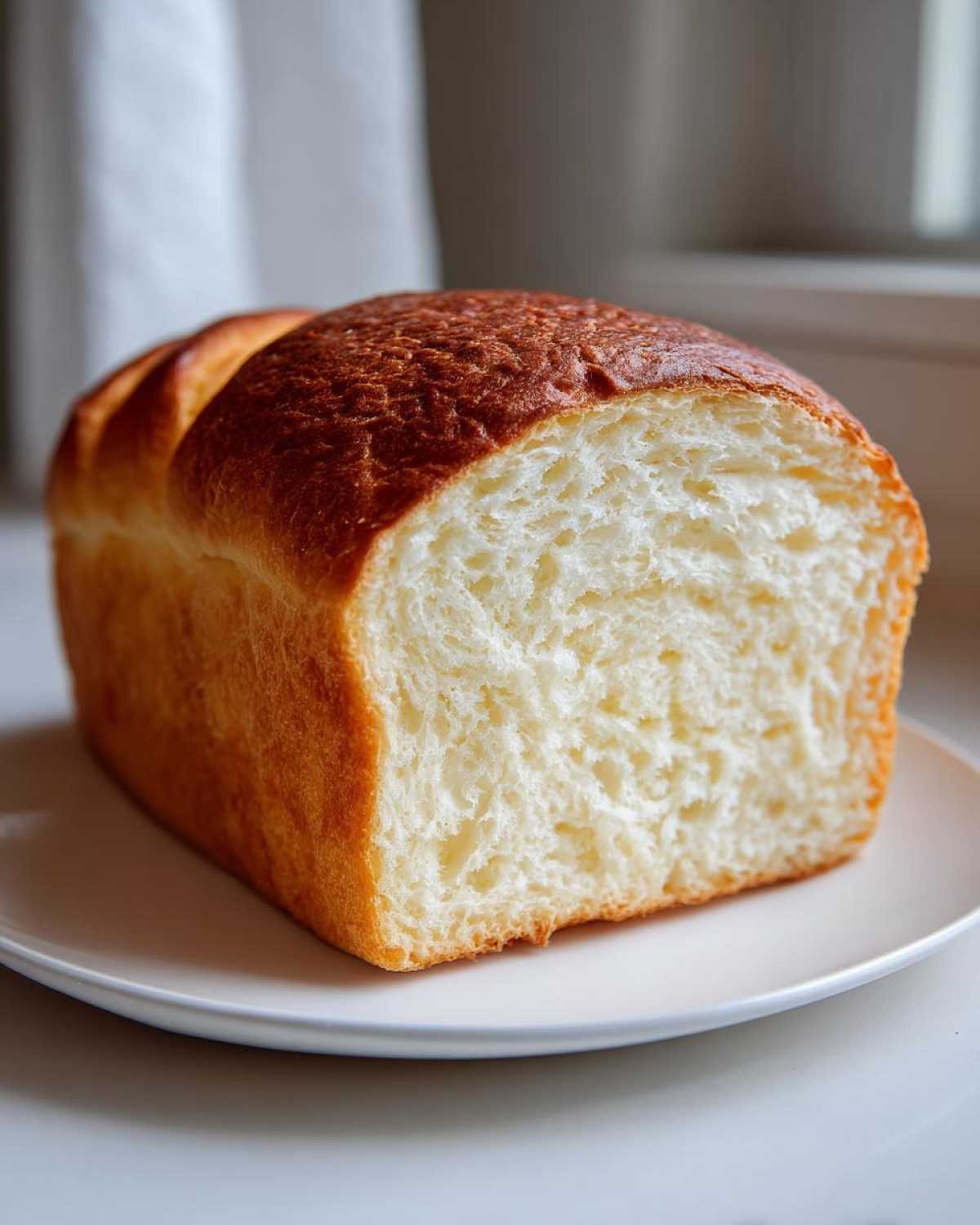
Even with a perfect recipe, a few little secrets can push your japanese milk bread from great to absolutely unbelievable! Remember that hot loaf coming out of the oven? As soon as you turn it out onto the cooling rack, grab some melted unsalted butter and gently brush the top generously. This is one of my absolute favorite Japanese Baking Secrets—it keeps the crust impossibly soft and gives it that gorgeous shine you see in the showcases.
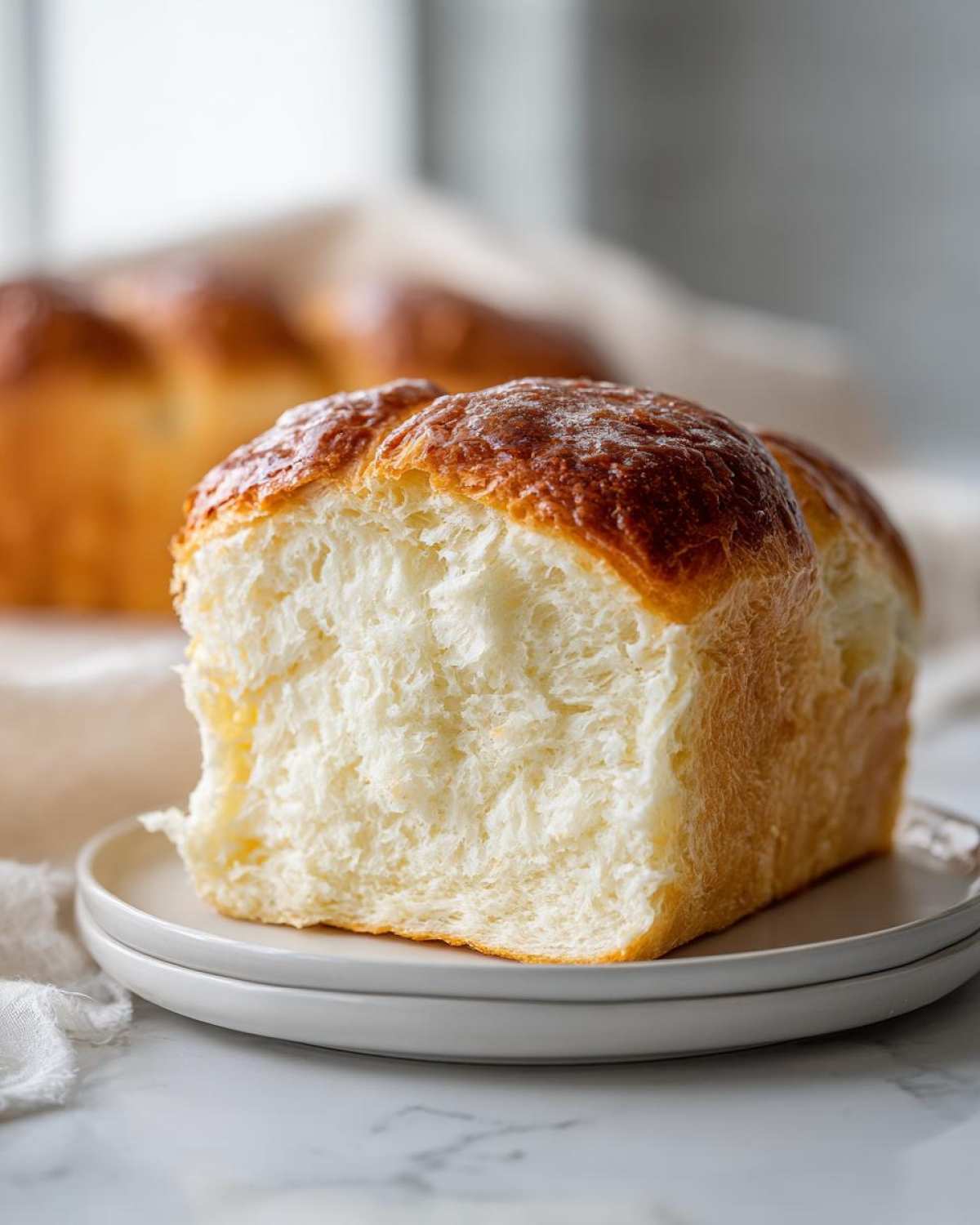
Also, when it comes to kneading, you are aiming for that windowpane test, which feels almost unreal when the dough is so soft. Don’t panic if your first loaf dough seems slightly sticky; the Tangzhong holds so much water! Just make sure you’ve got that full 10 to 15 minutes of kneading time after the butter is incorporated. Trust me, strong gluten equals that perfect pillowy lift for your Shokupan Recipe.
If you’re looking for another fantastic bread recipe to try once you nail this technique, my chocolate chip banana bread recipe is always a crowd-pleaser!
Storing and Reheating Your Long-Lasting Fresh Bread
One of the best things about using the Tangzhong method for our Shokupan Recipe is that this bread refuses to go stale quickly! Seriously, this bread stays unbelievably soft—it’s one of the main reasons I use this recipe over any other basic sandwich loaf. If you bake it on Sunday, it’s still squishy enough for a fantastic sandwich on Wednesday. That’s serious staying power!
The key to maximizing this longevity is how you treat it *after* it cools down. Make sure it’s totally cool on the rack first—no peeking or slicing while it’s warm! Once it’s completely cold, you need to wrap it up tight. I use plastic wrap first, really snug around the entire loaf, and then I might drop that into a large zip-top bag just for extra protection against the air. Store it right there on the counter at room temperature. Never stick this bread in the fridge; the cold air actually dries out bread faster, which would be a total tragedy after all this work!
If, somehow, you happen to have a slice left over on day three and it feels a tiny bit less pillowy? No problem! Just flash it in a toaster oven, or give it a minute in a dry skillet. It instantly revives that fresh-baked springiness. You can use this for everything from amazing grilled cheese to just dipping in soup. Don’t forget to check out my cranberry orange bread recipe if you want another loaf that happens to keep really well, too!
Serving Suggestions for Japanese Milk Bread
Now that you’ve pulled off the miracle of baking an incredibly soft loaf of Shokupan Recipe, you have to figure out the best ways to eat it! Honestly, you can just slice it thick and eat it plain while it’s still slightly warm, but that’s just me being impatient. The thing about this bread is that because the texture is so sturdy yet delicate, it’s amazing in ways regular bread fails.
My very favorite use is for the ultimate grilled sandwich. Because it’s rich with milk and butter, it toasts up golden brown on the outside so quickly but stays squishy inside. Forget those flimsy slices you get in store-bought loaves—this is the Best Bread for Sandwiches, period. It handles heavy fillings like sliced ham and cheese without tearing apart.
For breakfast, you absolutely must try it toasted with just a whisper of good quality salted butter and jam. That slight sweetness from the Tangzhong really shines through! Since this Fluffy Bread Baking loaf is so slightly sweet, it’s also fantastic served alongside savory dishes. We often use it to sop up the sauce from a big bowl of homemade lasagna—you can find my recipe for that right here! It feels almost decadent, but you deserve it after making this dough!
Frequently Asked Questions About Shokupan Recipe
I totally get it. Baking is fun, but sometimes you need a quick little answer for a last-minute kitchen crisis! I’ve gathered the questions I get asked most often about this recipe, especially from folks who are trying this style of **Asian Bakery Bread** for the first time.
Can I use the Yudane Method instead of Tangzhong for this Japanese Milk Bread Recipe?
Yes, absolutely! The Yudane method is just the Japanese version of the Tangzhong, and they both achieve the same amazing results for your Japanese Milk Bread Recipe. The main difference is that Tangzhong uses heated liquid (milk or water), while Yudane just uses boiling liquid poured over the flour. Either way, you’re pre-cooking those starches to lock in moisture. If you’re looking for an Easy Shokupan technique, honestly, both are pretty straightforward once you try them once!
My dough didn’t pass the windowpane test; what went wrong?
Oh, that’s frustrating, but don’t give up! If the dough snapped back too quickly or tore when you tried to stretch it thin enough to see light through it, you probably didn’t knead long enough, or maybe your butter was too cold when you added it. Remember, the butter addition is crucial—it adds richness but also needs time to fully hydrate and smooth out the gluten structure we built. For a classic Beginner Milk Bread attempt, sometimes kneading for an extra five minutes after you think you’re done makes all the difference in getting that perfect, glossy texture you need!
If you need to reach out with a more specific issue, you can always find my contact info on my contact page!
Estimated Nutritional Information for Japanese Milk Bread
Okay, let’s talk numbers briefly. I measure with my heart more than a scale most days, but when you’re making something this delicious as often as I do, you need to know what you’re eating! These figures are just estimates based on the recipe ingredients broken down into standard slices. Remember, this is a rich bread because of the butter and milk, so it has more staying power than standard white bread.
This recipe yields one loaf, and assuming you cut about 12 generous slices of this unbelievably soft japanese milk bread, here is the general breakdown per slice:
- Serving Size: 1 slice
- Calories: 180
- Sugar: 6g
- Fat: 5g (with 3g Saturated Fat)
- Carbohydrates: 28g
- Protein: 6g
- Sodium: 150mg
It’s important to keep in mind that these are generalized estimates. If you use a different brand of flour or whole-fat versus low-fat milk for your Tangzhong, those numbers can shift a little bit. Since we are so focused on achieving that Mochi Texture Bread experience, I never recommend cutting back on the butter or the milk solids, because that’s what makes it so incredibly soft!
If you aren’t sure about specific ingredient breakdowns or how they affect the end product, please take a look at our full site disclaimer for more details on how we calculate these figures!
Share Your Fluffy Bread Baking Results
Well, that’s it! You’ve done it! You’ve mastered the Tangzhong method and baked a loaf that seriously rivals the best Asian Bakery Bread shops out there. I’m just so excited for you to taste that heavenly softness. My kitchen smells amazing just thinking about it!
I truly hope this recipe made baking incredibly Soft Homemade Bread accessible and fun for you. Now that you’ve got this incredibly reliable japanese milk bread recipe in your back pocket, I want to see what you made!
Did your loaf crown perfectly? Did the Tangzhong give you that signature mochi-like chew you were hoping for? Don’t be shy! Head down to the comments section below and let me know how everything turned out. Did you brush it with butter right out of the oven? What’s the first thing you made with your perfect slices?
If you’re proud of your light, airy creation, I would absolutely love it if you took a photo and shared it on social media—just tag me so I can see your amazing work! And hey, if you stumbled upon this recipe and loved the results, please consider giving the recipe a star rating right here on the page so other bakers know this Fluffy Bread Baking trick is the real deal.
For more bread adventures and baking inspiration, you can always hop over to the main blog page and browse around. Happy baking, friends!
PrintUltimate Fluffy Japanese Milk Bread (Shokupan) with Tangzhong
Make incredibly soft, pillowy Japanese Milk Bread using the Tangzhong method for a mochi-like texture that stays fresh for days.
- Prep Time: 30 min
- Cook Time: 35 min
- Total Time: 3 hr 10 min
- Yield: 1 loaf
- Category: Baking
- Method: Baking
- Cuisine: Japanese
- Diet: Vegetarian
Ingredients
- 60g Milk
- 30g Bread Flour (for Tangzhong)
- 1 tsp Instant Yeast
- 250g Bread Flour (for dough)
- 30g Granulated Sugar
- 1/2 tsp Salt
- 1 Large Egg, lightly beaten
- 60ml Whole Milk, lukewarm
- 30g Unsalted Butter, softened
Instructions
- Prepare the Tangzhong: Whisk 60g milk and 30g bread flour in a small saucepan. Heat over medium-low, stirring constantly, until the mixture thickens into a paste (about 170°F or 77°C). It should coat the back of a spoon. Remove from heat and let cool completely.
- Activate Yeast: In a small bowl, combine the lukewarm milk and instant yeast. Let stand for 5 minutes until foamy.
- Mix Dry Ingredients: In a large bowl or stand mixer, whisk together the 250g bread flour and sugar. Add the salt and mix briefly.
- Combine Dough: Add the cooled Tangzhong, yeast mixture, and beaten egg to the dry ingredients. Mix on low speed until a shaggy dough forms.
- Knead: Increase speed to medium-low and knead for 5 minutes. Add the softened butter slowly, a piece at a time, ensuring each piece is incorporated before adding the next. Continue kneading for another 10-15 minutes until the dough is smooth, elastic, and passes the windowpane test.
- First Rise: Place the dough in a lightly oiled bowl, cover, and let rise in a warm place until doubled in size (about 1 to 1.5 hours).
- Shape: Gently deflate the dough. Divide it into three equal pieces. Roll each piece into a tight ball. Let the balls rest for 15 minutes, covered.
- Second Shape: Roll each rested ball into a log shape. Place the three logs side-by-side in a greased 9×5 inch loaf pan.
- Second Rise: Cover the pan loosely and let rise again in a warm place until the dough has crowned about 1 inch over the rim of the pan (about 45-60 minutes).
- Bake: Preheat your oven to 350°F (175°C). Brush the top of the dough lightly with milk or an egg wash for shine. Bake for 30-35 minutes, or until the top is golden brown and the internal temperature reaches 200°F (93°C).
- Cool: Immediately remove the bread from the pan and cool completely on a wire rack before slicing.
Notes
- For the softest crust, brush the hot loaf with melted butter immediately after removing it from the oven.
- If you do not have a stand mixer, you can knead the dough by hand for about 20 minutes after the butter is incorporated.
- Store the cooled bread tightly wrapped at room temperature to maintain softness for up to 3 days.
Nutrition
- Serving Size: 1 slice
- Calories: 180
- Sugar: 6
- Sodium: 150
- Fat: 5
- Saturated Fat: 3
- Unsaturated Fat: 2
- Trans Fat: 0
- Carbohydrates: 28
- Fiber: 1
- Protein: 6
- Cholesterol: 30